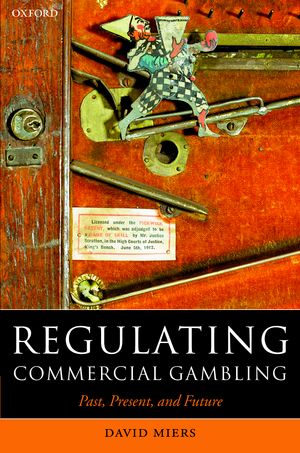
Three quarters of the British population gamble (mainly on the National Lottery), and they generate around 46 billion pounds a year. This volume sets recent developments in the regulation and deregulation of its three primary forms - betting, gaming, and lotteries - against an account of their social and legal history. Many of the concerns that excite controversy today are little different from those with which the Home Office grappled for most of the nineteenth and twentieth centuries. Based upon Home Office files and contemporary accounts, this book begins by evaluating how the law was used to control and suppress popular gambling. Miers shows how and why prohibition gave way to the recognition that regulation offered a more effective method of controlling a social pastime that, by the mid-twentieth century, had become a feature of everyday life. Concerns over gambling have recently resurfaced, as a result of Government proposals to replace the existing strict controls with a regulatory regime that will give greater scope for licensees to adopt more competitive practices. Like the introduction of the National Lottery in 1994, these proposals represent a marked departure from the