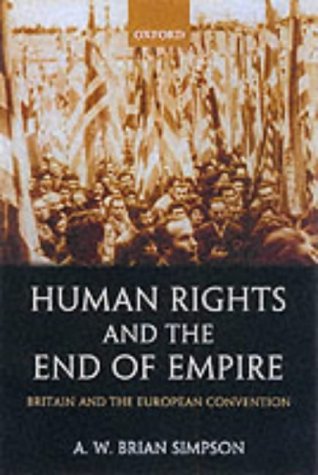
The European Convention on Human Rights, which came into force in 1953 after signature in 1950, established the most effective system for the international protection of human rights which has yet come into existence anywhere in the world. Since the collapse of communism it has come to be extended to the countries of Central and Eastern Europe, and some seven hundred million people now, at least in principle, live under its protection.
It remains far and away the most significant achievement of the Council of Europe, which was established in 1949, and was the first product of the post-war movement for European integration. It has now at last been incorporated into British domestic law. Nothing remotely resembling the surrender of sovereignty required by accession to the Convention had ever previously been accepted by governments.
There exists no published account which relates the signature and ratification of the Convention to the political history of the period, or which gives an account of the processes of negotiation which produced it. This book, which is based on extensive use of archival material, therefore aims to break entirely new ground.