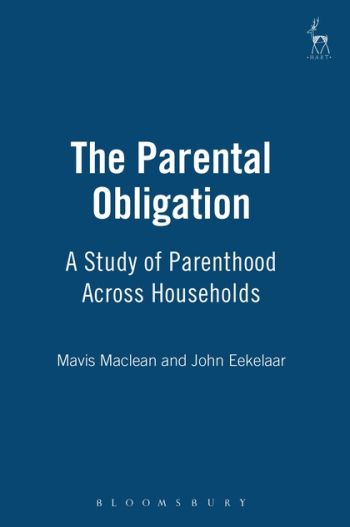
What kinds of obligations do parents have towards their children as family life becomes more complex? Many children pass through a number of different households, living with one or both parents, step-parents and step-siblings. The controversy surrounding the Child Support Act indicates that social norms do not yet sit easily with legal regulations. So how are new forms of family life accommodated in the legal system? This book argues that parenthood, rather than marriage, is now emerging as the central mechanism through which moral principles are converted into legal and social obligations.;This study of 250 children who do not live with both of their parents shows that despite the comparative legal emptiness of marriage, the experience of living longer with both parents than is usually the case of children of cohabiting or single parents, endows the child with social capital in the form of enduring involvement with the outside parent, even after divorce, and that this happens to a greater extent than for children whose parents were not married. The book provides an account of the decline of marriage and the growth of alternative relationships.