
The eBooks we sell are sold as a single-user licence and are intended for the end user only.
The sale of some eBooks are restricted to certain countries. To alert you to such restrictions, please select the country of the billing address of your credit or debit card you wish to use for payment.
For further information see https://www.wildy.com/ebook-formats
Once the order is confirmed an e-mail will be sent to you to allow you to download the eBook. For UK purchases this will be automatic. For purchases outside the UK a member of staff will need to confirm the sale. (Staff are available to do this during normal business hours, Mon-Fri 8:30-17:00 UK time)
All eBooks are supplied firm sale and cannot be returned. If you believe there is a fault with your eBook then contact us on ebooks@wildy.com and we will help in resolving the issue. This does not affect your statutory rights.
Due to a technical issue some ebooks are not available to order.
Since the early days of the Obama administration, conservative politicians have railed against the President's "war on coal." As evidence of this supposed siege, they point to a series of rules issued by the Environmental Protection Agency that require the nation's power plants to cut their emissions of several types of air pollution. It's true that, because coal produces far more pollution than any other major energy source, the EPA's rules are expected to further reduce the fuel's already shrinking share of the electricity market, in favor of cleaner options like natural gas, wind and solar power. Even so, the rules are hardly the "unprecedented regulatory assault" that opponents make them out to be. Instead, they are merely the latest chapter in a longstanding quest for redemption, a multi-decade struggle to overcome a tragic flaw in our nation's most important environmental law.
In 1970, a nearly unanimous Congress passed the Clean Air Act, which had the remarkably ambitious aim of eliminating all air pollution that posed a threat to public health or welfare. But there was a problem: for some of the most common pollutants, Congress empowered the EPA to set emission limits only for newly constructed industrial facilities-most notably, power plants. Existing facilities, by contrast, would be largely exempt from direct federal regulation-a regulatory practice known as "grandfathering." What lawmakers didn't anticipate was that imposing costly requirements on new plants while giving existing ones a pass would simply encourage those old plants to stay in business much longer than originally planned. For almost half a century now, the core problems of U.S. environmental policy have flowed inexorably from the smokestacks of these coal-fired clunkers, which continue to pollute at far higher rates than their younger peers.
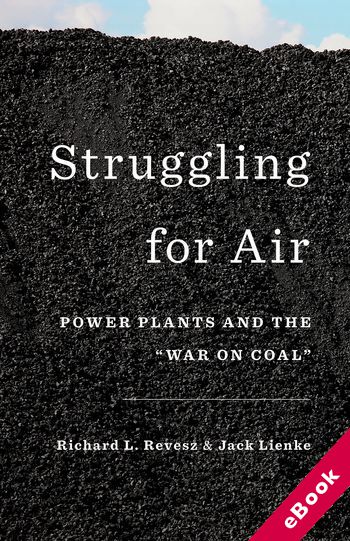
In Struggling for Air, Richard L. Revesz and Jack Lienke chronicle the political compromises that gave rise to grandfathering, its deadly consequences, and the repeated attempts-by Presidential administrations of both parties-to make things right.










