
The eBooks we sell are sold as a single-user licence and are intended for the end user only.
The sale of some eBooks are restricted to certain countries. To alert you to such restrictions, please select the country of the billing address of your credit or debit card you wish to use for payment.
For further information see https://www.wildy.com/ebook-formats
Once the order is confirmed an e-mail will be sent to you to allow you to download the eBook. For UK purchases this will be automatic. For purchases outside the UK a member of staff will need to confirm the sale. (Staff are available to do this during normal business hours, Mon-Fri 8:30-17:00 UK time)
All eBooks are supplied firm sale and cannot be returned. If you believe there is a fault with your eBook then contact us on ebooks@wildy.com and we will help in resolving the issue. This does not affect your statutory rights.
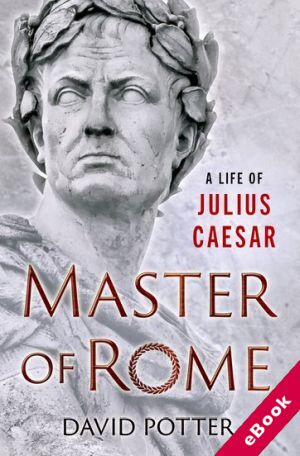
A compelling new portrait of one of the ancient worlds most famous and consequential figures.
By any measure, Julius Caesar is one of the most significant and well-known figures in ancient Roman history. Self-identified as a "popular" politician, he advocated for effective government to better the lives of the average Roman; however, he believed this government could not be based upon the existing democracy, which he regarded as corrupt and inefficient. It could only be through his personal management and the massive organization he built to overthrow the government that he could ensure the prosperity of all Romans.
Through a careful analysis of the ancient sources, including Caesar's own writings, David Potter offers us a stunning and original portrait of the general and statesman's character and methods. He shows Caesar as a highly organized manager with an extraordinary ability to adjust to circumstances while maintaining a steady equivalent of an ancient media presence that attracted favorable attention. After his death, Caesar's followers put forward a narrative of his life that made his rise to power seem inevitable, but Caesar's own writing tells us a different story—one of a detail-oriented general who demanded a high degree of accountability from his subordinates.
A critical aspect of Caesar's philosophy of command was the need to find room for former enemies to serve in his organization. He believed that effective conquest wasn't possible unless former enemies felt it was in their interest to work for rather than against him. While this philosophy catapulted Caesar to great fame and esteem as a general during the wars in Gaul, when he attempted to put this method into effect in the wake of the civil war that established him as the master of Rome, it led to his brutal and infamous assassination in 44 BCE. Master of Rome tells a dramatic story about one of history's most intriguing figures who rose from the fringes of Roman political society and the qualities that enabled him to dominate the world in which he lived.










