The eBooks we sell are sold as a single-user licence and are intended for the end user only.
The sale of some eBooks are restricted to certain countries. To alert you to such restrictions, please select the country of the billing address of your credit or debit card you wish to use for payment.
For further information see https://www.wildy.com/ebook-formats
Once the order is confirmed an e-mail will be sent to you to allow you to download the eBook. For UK purchases this will be automatic. For purchases outside the UK a member of staff will need to confirm the sale. (Staff are available to do this during normal business hours, Mon-Fri 8:30-17:00 UK time)
All eBooks are supplied firm sale and cannot be returned. If you believe there is a fault with your eBook then contact us on ebooks@wildy.com and we will help in resolving the issue. This does not affect your statutory rights.
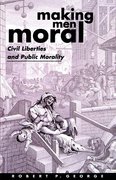
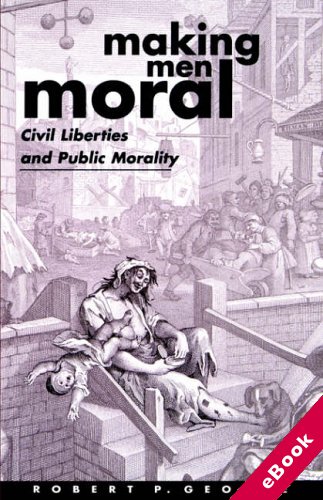
Contemporary liberal thinkers commonly suppose that there is something in principle unjust about the legal prohibition of putatively victimless immoralities. Against the prevailing liberal view, Robert P. George defends the proposition that ""moral laws"" can play a legitimate, if subsidiary, role in preserving the ""moral ecology"" of the cultural environment in which people make the morally significant choices by which they form their characters and influence, for good or ill, the moral lives of others.
The author shows that a defense of morals legislation is fully compatible with a ""pluralistic perfectionist"" political theory of civil liberties and public morality.;This study is intended for postgraduate students and scholars of natural law, legal philosophy and political science and Catholic theologians, religious and moral philosophers.