The eBooks we sell are sold as a single-user licence and are intended for the end user only.
The sale of some eBooks are restricted to certain countries. To alert you to such restrictions, please select the country of the billing address of your credit or debit card you wish to use for payment.
For further information see https://www.wildy.com/ebook-formats
Once the order is confirmed an e-mail will be sent to you to allow you to download the eBook. For UK purchases this will be automatic. For purchases outside the UK a member of staff will need to confirm the sale. (Staff are available to do this during normal business hours, Mon-Fri 8:30-17:00 UK time)
All eBooks are supplied firm sale and cannot be returned. If you believe there is a fault with your eBook then contact us on ebooks@wildy.com and we will help in resolving the issue. This does not affect your statutory rights.
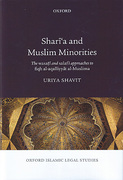
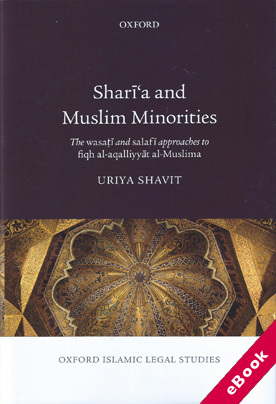
Based on a comparative analysis of several hundred religio-juristic treatises and fatwas (religious decisions), Shari'a and Muslim Minorities: The Wasati and Salafi Approaches to Fiqh al-Aqalliyyat al-Muslima offers the most systematic and comprehensive study to date of fiqh al aqalliyyat al-Muslima - the field in Islamic jurisprudence that treats issues that are unique to Muslims living in majority non-Muslim societies.
The book argues that two main contesting approaches to fiqh al-aqalliyyat al-Muslima, the wasati and the salafi, have developed, in part dialectically. While both envision a future Islamizing of the West as a main justification for Muslim residence in the West, the wasati approach is pragmatic, facilitating, and integration-minded, whereas the salafi calls for strict application of religious norms and for introversion.
The volume examines diverse and highly-debated juristic issues, including the permissibility of naturalizing in non-Muslim states, participating in their electoral systems and serving in their militaries and police forces; the permissibility of taking mortgages and student loans; the permissibility of congratulating Christians on Christmas or receiving Christmas bonuses; and the permissibility of working in professions that involve breaching of religio-legal prohibitions (e.g. serving pork).
Discussions highlight the diversity within contemporary Islamic jurisprudence and introduce new nuances to highly-charged concepts such as proselytizing, integration, and multiculturalism.