
The eBooks we sell are sold as a single-user licence and are intended for the end user only.
The sale of some eBooks are restricted to certain countries. To alert you to such restrictions, please select the country of the billing address of your credit or debit card you wish to use for payment.
For further information see https://www.wildy.com/ebook-formats
Once the order is confirmed an e-mail will be sent to you to allow you to download the eBook. For UK purchases this will be automatic. For purchases outside the UK a member of staff will need to confirm the sale. (Staff are available to do this during normal business hours, Mon-Fri 8:30-17:00 UK time)
All eBooks are supplied firm sale and cannot be returned. If you believe there is a fault with your eBook then contact us on ebooks@wildy.com and we will help in resolving the issue. This does not affect your statutory rights.
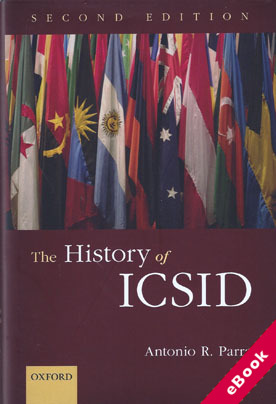
This is the first book to detail the history and development of the International Centre for Settlement of Investment Disputes (ICSID) and its constituent treaty, the Convention on the Settlement of Investment Disputes between States and Nationals of Other States, covering the years from 1955 to 2010.
Antonio Parra, the first Deputy Secretary-General of ICSID, traces the immediate origins of the Convention, in the years 1955 to 1962, and gives a stage-by-stage narrative of the drafting of the Convention between 1962 and 1965.
He recounts details of bringing the Convention into force in 1966 and the elaboration of the initial versions of the Regulations and Rules of ICSID adopted at the first meetings of its Administrative Council in 1967. The three periods 1968 to 1988, 1989 to 1999, and 2000 to June 30, 2010, are covered in separate chapters which examine the expansion of the Centre's activities and changes made to the Regulations and Rules over the years.
There are also overviews of the conciliation and arbitration cases submitted to ICSID in the respective periods, followed by in-depth discussions of selected cases and key issues within them. A concluding chapter discusses some of the broad themes and findings of the book, and includes several suggestions for further changes at ICSID to help ensure its continued success.
The book offers unique insight into the establishment and design of ICSID, as well as into how the institution evolved and its relationship with the World Bank. It is essential reading for those involved in this field.










