
The eBooks we sell are sold as a single-user licence and are intended for the end user only.
The sale of some eBooks are restricted to certain countries. To alert you to such restrictions, please select the country of the billing address of your credit or debit card you wish to use for payment.
For further information see https://www.wildy.com/ebook-formats
Once the order is confirmed an e-mail will be sent to you to allow you to download the eBook. For UK purchases this will be automatic. For purchases outside the UK a member of staff will need to confirm the sale. (Staff are available to do this during normal business hours, Mon-Fri 8:30-17:00 UK time)
All eBooks are supplied firm sale and cannot be returned. If you believe there is a fault with your eBook then contact us on ebooks@wildy.com and we will help in resolving the issue. This does not affect your statutory rights.
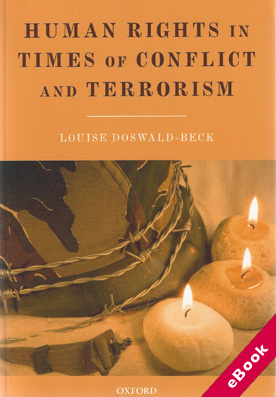
This book is a guide to international human rights law as it applies to situations of armed conflict, to counter-terrorism measures and to any other situation of actual or potential violence requiring security measures. These situations can lead to some of the most fundamental human rights being put in danger of being violated.
These include the right to life, the prohibition of torture and inhuman or degrading treatment, enforced disappearance, all the rights relating to detention and due process of law, and the freedoms most commonly affected by armed conflict and counter-terrorism.
The book begins with a presentation on the application of human rights to such situations and an explanation of the regime of limitations and derogations. After an overall description of the relationship between human rights law, on the one hand, and international humanitarian law and international counter-terrorism measures, on the other, the book concentrates on the rights themselves.
Each chapter presents the relevant treaty provisions and explains the interpretation of the rights by reference to the case law and general comments of these treaty bodies. The book concludes with a section on how international human rights law protects certain vulnerable and disadvantaged populations in such situations.










