
The eBooks we sell are sold as a single-user licence and are intended for the end user only.
The sale of some eBooks are restricted to certain countries. To alert you to such restrictions, please select the country of the billing address of your credit or debit card you wish to use for payment.
For further information see https://www.wildy.com/ebook-formats
Once the order is confirmed an e-mail will be sent to you to allow you to download the eBook. For UK purchases this will be automatic. For purchases outside the UK a member of staff will need to confirm the sale. (Staff are available to do this during normal business hours, Mon-Fri 8:30-17:00 UK time)
All eBooks are supplied firm sale and cannot be returned. If you believe there is a fault with your eBook then contact us on ebooks@wildy.com and we will help in resolving the issue. This does not affect your statutory rights.
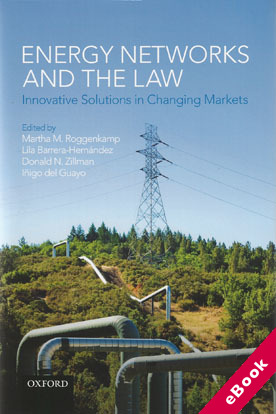
Networks like cables and pipelines are essential for a functioning energy market. This book provides a clear and insightful overview of the legal challenges this poses in the modern world.
The construction and use of these networks depends on developments in technology, policies, and legal regulation. Recently, the energy sector has been faced with considerable challenges and changes. Energy liberalisation and deregulation, and the fact that traditional energy supplies like fossil fuels and large hydro plants are increasingly located far from the area of demand has drastically changed the energy landscape. The need for new sources of energy supply can therefore be found all over the world.
This book investigates the challenges that face governments engaged in this renewal, particularly since in many cases these networks are, by necessity, international. The construction of new networks always involves the application of planning and environmental laws, and the complications these pose only increase as networks pass through the territory of several different countries. This book analyzes the evolution of this area from several angles, both geographical and legal.
The authors combine knowledge and expertise from a variety of sources and backgrounds to present an invaluable overview of the regulatory developments and perspectives that shape the legal frameworks in which governments develop these networks, and the way in which account must be taken of new sources of energy by law-makers.










