The eBooks we sell are sold as a single-user licence and are intended for the end user only.
The sale of some eBooks are restricted to certain countries. To alert you to such restrictions, please select the country of the billing address of your credit or debit card you wish to use for payment.
For further information see https://www.wildy.com/ebook-formats
Once the order is confirmed an e-mail will be sent to you to allow you to download the eBook. For UK purchases this will be automatic. For purchases outside the UK a member of staff will need to confirm the sale. (Staff are available to do this during normal business hours, Mon-Fri 8:30-17:00 UK time)
All eBooks are supplied firm sale and cannot be returned. If you believe there is a fault with your eBook then contact us on ebooks@wildy.com and we will help in resolving the issue. This does not affect your statutory rights.
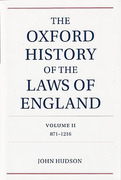
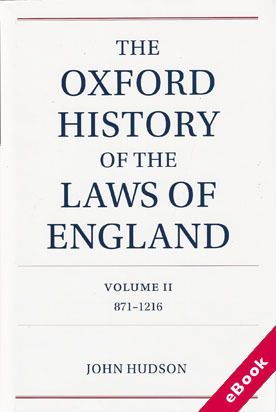
This volume in the landmark Oxford History of the Laws of England series spans three centuries that encompassed the tumultuous years of the Norman conquest, and during which the common law as we know it today began to emerge.
The first full-length treatment of all aspects of the early development of the English common law in a century, featuring extensive research into the original sources that bring the era to life, and providing an interpretative account, a detailed subject analysis, and fascinating glimpses into medieval disputes.
Starting with King Alfred (871-899), this book examines the particular contributions of the Anglo-Saxon period to the development of English law, including the development of a powerful machinery of royal government, significant aspects of a long-lasting court structure, and important elements of law relating to theft and violence. Until the reign of King Stephen (1135-54), these Anglo-Saxon contributions were maintained by the Norman rulers, whilst the Conquest of 1066 led to the development of key aspects of landholding that were to have a continuing effect on the emerging common law.
The Angevin period saw the establishment of more routine royal administration of justice, closer links between central government and individuals in the localities, and growing bureaucratization. Finally, the later twelfth and earlier thirteenth century saw influential changes in legal expertise. The book concludes with the rebellion against King John in 1215 and the production of the Magna Carta.
Laying out in exhaustive detail the origins of the English common law through the ninth to the early thirteenth centuries, this book will be essential reading for all legal historians and a vital work of reference for academics, students, and practitioners.