
The eBooks we sell are sold as a single-user licence and are intended for the end user only.
The sale of some eBooks are restricted to certain countries. To alert you to such restrictions, please select the country of the billing address of your credit or debit card you wish to use for payment.
For further information see https://www.wildy.com/ebook-formats
Once the order is confirmed an e-mail will be sent to you to allow you to download the eBook. For UK purchases this will be automatic. For purchases outside the UK a member of staff will need to confirm the sale. (Staff are available to do this during normal business hours, Mon-Fri 8:30-17:00 UK time)
All eBooks are supplied firm sale and cannot be returned. If you believe there is a fault with your eBook then contact us on ebooks@wildy.com and we will help in resolving the issue. This does not affect your statutory rights.
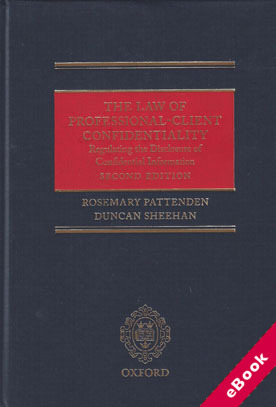
This book examines the disclosure and withholding of all forms of confidential information handled by professionals. Fully revised and updated, the new edition examines the numerous recent developments in the law, particularly following revelations by the media of the interception of professional confidences by phone hacking and other means.
Its primary focus is on the law of England and Wales, but it includes insights from the secondary literature and case law of Australia, Canada, Ireland, New Zealand, and Scotland. This allows it to predict how English courts may fill gaps in the law, and makes it a useful resource for practitioners in other common law jurisdictions.
The book begins with a discussion of the basic principles of confidentiality, including types of confidential information, confidentiality obligations, disclosures, and confidentiality obligation. Part I examines the legal instruments for the enforcement of confidentiality, including contractual obligations, tort of misuse of private information, equitable wrongs, actions against third parties, civil remedies and criminal offences, and remedies beyond the courts.
Part II discusses justified disclosure, including those relating to public interest, official investigations, administration of justice, consent and waiver, and lapsed confidentiality. Part III analyses the grounds for justified non-disclosure, including legal professional privilege, public interest immunity, contractual or equitable obligations, data protection and freedom of information, privacy protection, and non-disclosure to client. Finally, Part IV discusses limiting the extent of a lawful disclosure, dealing with circulation restrictions, public reporting, anonymity, court attendance restrictions, and collateral use.
This is an essential reference for those advising either the professional or the individual client on issues relating to the disclosure of confidential personal information.










