
The eBooks we sell are sold as a single-user licence and are intended for the end user only.
The sale of some eBooks are restricted to certain countries. To alert you to such restrictions, please select the country of the billing address of your credit or debit card you wish to use for payment.
For further information see https://www.wildy.com/ebook-formats
Once the order is confirmed an e-mail will be sent to you to allow you to download the eBook. For UK purchases this will be automatic. For purchases outside the UK a member of staff will need to confirm the sale. (Staff are available to do this during normal business hours, Mon-Fri 8:30-17:00 UK time)
All eBooks are supplied firm sale and cannot be returned. If you believe there is a fault with your eBook then contact us on ebooks@wildy.com and we will help in resolving the issue. This does not affect your statutory rights.
Recent years have seen increased interest in international philanthropy and cross-border charitable giving. A new generation of high-net-worth individuals, keen to dedicate part of their wealth to philanthropic purposes, and an increasingly global charitable landscape raise a range of complex issues.
What is a 'charity'? Does that definition vary from one jurisdiction to another? Are domestic charities taxed differently to foreign organizations?
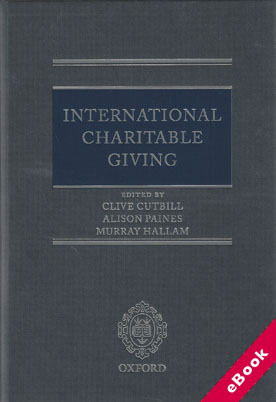
Written by a team of experts from around the world, International Charitable Giving provides a detailed and much-needed treatment of the interaction between the various legal systems at play in this complicated area of the law. By untangling the many issues facing practitioners, it facilitates clear and comprehensive advice to donors and recipients alike.
The book provides a comprehensive picture of the most important issues relevant to charitable giving and philanthropy worldwide, including taxation, issues surrounding money laundering and terrorist financing, and the role of EU Law. Alongside a thorough discussion of the broader issues impacting on charitable donation, the book includes a range of chapters on specific national legal systems, including Switzerland, Israel, and Hong Kong, as well as a chapter on Islamic Law.
Each of the jurisdictions has been selected because of its tradition of charitable giving and relevance to the transfer of charitable monies internationally, as well as its importance in relation to the jurisprudence in the field. Expertly written, these chapters provide a detailed survey of the laws, regulations, and policies governing charities and their activities in the relevant jurisdiction, together with an examination of the procedures to be followed for tax-efficient transborder charitable giving.










