
The eBooks we sell are sold as a single-user licence and are intended for the end user only.
The sale of some eBooks are restricted to certain countries. To alert you to such restrictions, please select the country of the billing address of your credit or debit card you wish to use for payment.
For further information see https://www.wildy.com/ebook-formats
Once the order is confirmed an e-mail will be sent to you to allow you to download the eBook. For UK purchases this will be automatic. For purchases outside the UK a member of staff will need to confirm the sale. (Staff are available to do this during normal business hours, Mon-Fri 8:30-17:00 UK time)
All eBooks are supplied firm sale and cannot be returned. If you believe there is a fault with your eBook then contact us on ebooks@wildy.com and we will help in resolving the issue. This does not affect your statutory rights.
Due to a technical issue some ebooks are not available to order.
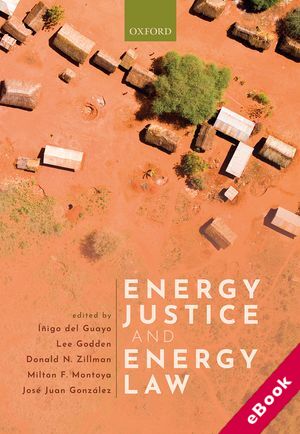
Energy justice has emerged over the last decade as a matter of vital concern in energy law, which can be seen in the attention directed to energy poverty, and the United Nations Sustainable Development Goals. There are energy justice concerns in areas of law as diverse as human rights, consumer protection, international law and trade, and in many forms of regional and national energy law and regulation.
This edited collection explores in detail at four kinds of energy justice. The first, distributive justice, relates to the equitable distribution of the benefits and burdens of energy activities, which is challenged by the existence of people suffering from energy poverty. Secondly, procedural (or participation) justice consists of the right of all communities to participate in decision-making regarding energy projects and policies that affect them. This dimension of energy justice often includes procedural rights to information and access to courts. Under the concept of reparation (or restorative) justice, the book looks at even-handed enforcement of energy statutes and regulations, as well as access to remedies when legal rights are violated. Finally, the collection addresses social justice, with the recognition that energy injustice cannot be separated from other social ills, such as poverty and subordination based on race, gender, or indigeneity. These issues feed into a wider conversation about how we achieve a 'just' energy transition, as the world confronts the urgent challenges of climate change.










