
The eBooks we sell are sold as a single-user licence and are intended for the end user only.
The sale of some eBooks are restricted to certain countries. To alert you to such restrictions, please select the country of the billing address of your credit or debit card you wish to use for payment.
For further information see https://www.wildy.com/ebook-formats
Once the order is confirmed an e-mail will be sent to you to allow you to download the eBook. For UK purchases this will be automatic. For purchases outside the UK a member of staff will need to confirm the sale. (Staff are available to do this during normal business hours, Mon-Fri 8:30-17:00 UK time)
All eBooks are supplied firm sale and cannot be returned. If you believe there is a fault with your eBook then contact us on ebooks@wildy.com and we will help in resolving the issue. This does not affect your statutory rights.
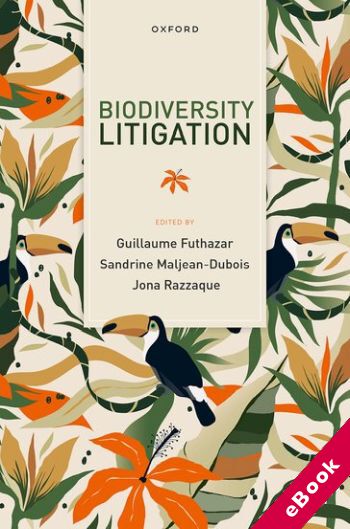
Biodiversity is in accelerated decline and urgent action is needed. In 2020, the Strategic Plan for Biodiversity ended, and none of its Aichi Targets were met. Despite the legally disappointing situation on a global level, the role of national courts in adjudicating climate change litigation is showing potential for effective mitigation and adaptation, and judges have become key actors in linking internationally agreed goals with tangible national commitments to mitigate climate change. Can this pursuit of globally agreed goals at a local level be transposed and lead a similar trend for biodiversity governance?
This edited collection gives readers an overview of the shape and reach of biodiversity litigation, drawing on specific case studies from countries such as Brazil, China, India and Canada. It considers two questions: Firstly, what is the influence of international biodiversity law on biodiversity litigation? Secondly, what are the trends of biodiversity litigation? Leading experts discuss these questions from the perspective of developing, developed and mega bio-diverse countries, promoting the concept of biodiversity litigation as a common notion of environmental law, and arguing for more creative legal thinking when dealing with and analysing biodiversity-related disputes.










