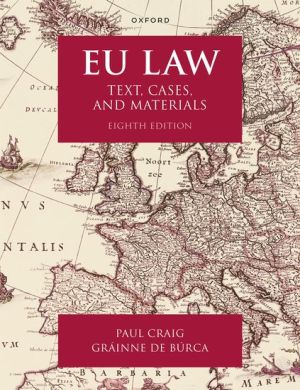
EU Law: Text, Cases, and Materials - EU edition 8th ed
ISBN13: 9780198915522
Published: August 2024
Publisher: Oxford University Press
Country of Publication: UK
Format: Paperback
The definitive EU law textbook: the most authoritative coverage, including extracts from all key cases and materials, from a world-renowned author team.
Respected as the definitive textbook on the subject, this is the stand-alone guide to EU law. The world-renowned authors offer the ideal balance of commentary, key cases, and materials to provide the most authoritative coverage and analysis. Succinct and clear commentary sets out the law, illuminates the accompanying materials, and delivers critical and contextual analysis of all the legal and political aspects of EU law and policy. The authors provide carefully chosen extracts from a wide range of sources including case judgments, EU legislation, and academic articles providing easy access to the materials that are key to understanding this dynamic and diverse area of law.
Key Features:
- If you are studying EU law in the UK, please see EU Law: Text, Cases, and Materials UK Version
- Written by leading scholars on European Union law and provides an insightful analysis of the subject.
- Succinct and clear commentary sets out the law, illuminates the accompanying materials, and delivers critical and contextual analysis of all the legal and political aspects of EU law and policy.
The eighth edition has been updated to include expanded discussions of key topics, including:
- A revised chapter on membership, now including issues relating to entry, as well as Member State obligations and exit
- Adjusted chapters on legislation, decision-making, and democracy, allowing expanded treatment of the complex issues concerning governance and democracy within the EU
- Separate and expanded discussions of free movement of capital and economic and monetary union
- Inclusion of important new case law on areas such as: competence, preliminary rulings, State aids, human rights, citizenship, competition, direct effect, freedom of establishment, and international relations law