The eBooks we sell are sold as a single-user licence and are intended for the end user only.
The sale of some eBooks are restricted to certain countries. To alert you to such restrictions, please select the country of the billing address of your credit or debit card you wish to use for payment.
For further information see https://www.wildy.com/ebook-formats
Once the order is confirmed an e-mail will be sent to you to allow you to download the eBook. For UK purchases this will be automatic. For purchases outside the UK a member of staff will need to confirm the sale. (Staff are available to do this during normal business hours, Mon-Fri 8:30-17:00 UK time)
All eBooks are supplied firm sale and cannot be returned. If you believe there is a fault with your eBook then contact us on ebooks@wildy.com and we will help in resolving the issue. This does not affect your statutory rights.
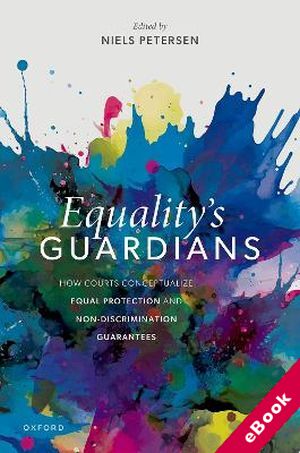
Equality's Guardians offers an unparalleled comparative analysis of constitutional equality case law from apex courts across 18 jurisdictions worldwide, including key international human rights treaties. This groundbreaking book aims to map various courts' diverse equality case law, revealing a richer comparative picture than the commonly discussed non-discrimination model prevalent in common law jurisdictions. By identifying four distinct models of equality, the book classifies each jurisdiction based on the level of deference courts grant to the legislature. The second aim of Equality's Guardians is to delve into the reasons behind courts' choices of specific equality models. Rather than providing a uniform answer, the analysis uncovers a range of cultural and institutional factors influencing these decisions.
This nuanced approach highlights that the models of equality must be understood within the unique institutional and cultural contexts of each jurisdiction. Ultimately, Equality's Guardians: How Courts Conceptualize Equal Protection and Non-Discrimination Guarantees challenges the notion of a one-size-fits-all approach to equality. It emphasizes that the identified models are not to be normatively ranked but appreciated as products of their specific environments.
This comprehensive study is essential for anyone interested in the complexities of constitutional equality and the varied ways it is interpreted and applied around the world. This is an open access title available under the terms of a CC BY-NC-ND 4.0 International licence. It is free to read on Oxford Scholarship Online and offered as a free PDF download from OUP and selected open access locations.