
The eBooks we sell are sold as a single-user licence and are intended for the end user only.
The sale of some eBooks are restricted to certain countries. To alert you to such restrictions, please select the country of the billing address of your credit or debit card you wish to use for payment.
For further information see https://www.wildy.com/ebook-formats
Once the order is confirmed an e-mail will be sent to you to allow you to download the eBook. For UK purchases this will be automatic. For purchases outside the UK a member of staff will need to confirm the sale. (Staff are available to do this during normal business hours, Mon-Fri 8:30-17:00 UK time)
All eBooks are supplied firm sale and cannot be returned. If you believe there is a fault with your eBook then contact us on ebooks@wildy.com and we will help in resolving the issue. This does not affect your statutory rights.
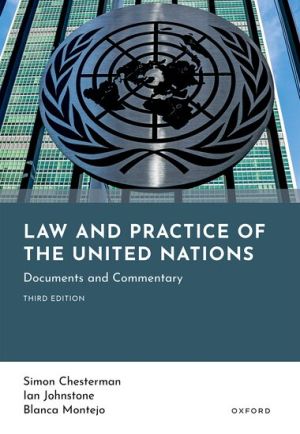
Law and Practice of the United Nations: Documents and Commentary combines primary materials with expert commentary, exploring the interaction between law, policy, and practice in the United Nations, as well as the challenges and opportunities global multilateral institutions face in a fast-changing global climate.
The third edition of this renowned volume, used by teachers, practitioners, and scholars around the world, begins with a section on why the UN remains relevant in an era of geopolitical tension and legal uncertainty, focusing on conflicts in Ukraine and Gaza. Following several chapters on the organizations legal and institutional capacities, it then turns to the most challenging issues confronting the UN and the global community, from conflict, weapons of mass destruction, and mass atrocities to poverty, climate change, and artificial intelligence. The book concludes with a section on accountability for wrongs committed by or in the name of the organization, and reform proposals to make it fit for purpose 80 years after its creation. Each chapter includes short essays by the authors that connect the primary documents to the legal, institutional and political issues relevant to the practice of diplomacy and development of international law. Each chapter also includes questions and hypotheticals to guide discussion of the primary materials. This book helps students, scholars and practitioners to understand the central role the United Nations has played in the international legal order since 1945 and suggests avenues to ensure that the organization continues to serve the important purposes for which it was established.










