The eBooks we sell are sold as a single-user licence and are intended for the end user only.
The sale of some eBooks are restricted to certain countries. To alert you to such restrictions, please select the country of the billing address of your credit or debit card you wish to use for payment.
For further information see https://www.wildy.com/ebook-formats
Once the order is confirmed an e-mail will be sent to you to allow you to download the eBook. For UK purchases this will be automatic. For purchases outside the UK a member of staff will need to confirm the sale. (Staff are available to do this during normal business hours, Mon-Fri 8:30-17:00 UK time)
All eBooks are supplied firm sale and cannot be returned. If you believe there is a fault with your eBook then contact us on ebooks@wildy.com and we will help in resolving the issue. This does not affect your statutory rights.
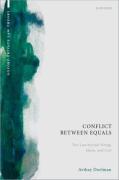
Conflict between Equals argues that tort law has to be understood and ultimately vindicated as the actualization of two theories: the conflict and the equality theory of tort law. It is not harm, wrongdoing, or social cost that gives us reason to have tort law in the first place. Instead, it is human conflict-specifically, conflict between our fundamental interests-that serves as the moral function of tort law. How we respond to such conflicts determines which harms, wrongs, or costs should, if at all, be addressed by tort law.
The conflict theory elaborates on the nature and normative significance of three types of conflict: inherently valuable, tolerably valuable, and valueless. The theory emphasizes the importance of preventing valueless conflict, containing tolerably valuable conflict, and constructing the conditions necessary for inherently valuable conflict to arise. Moreover, the human conflict to which tort law responds reflects a commitment to treating the parties to a conflict as equals. The equality theory is grounded in the egalitarian ideal of relating as equals, thus tort law must determine terms of interaction that take seriously differences in the interests and conditions of the interacting parties. By doing so, tort law secures the ability of the parties in a conflict to relate as substantive, rather than merely formal, equals.