
The eBooks we sell are sold as a single-user licence and are intended for the end user only.
The sale of some eBooks are restricted to certain countries. To alert you to such restrictions, please select the country of the billing address of your credit or debit card you wish to use for payment.
For further information see https://www.wildy.com/ebook-formats
Once the order is confirmed an e-mail will be sent to you to allow you to download the eBook. For UK purchases this will be automatic. For purchases outside the UK a member of staff will need to confirm the sale. (Staff are available to do this during normal business hours, Mon-Fri 8:30-17:00 UK time)
All eBooks are supplied firm sale and cannot be returned. If you believe there is a fault with your eBook then contact us on ebooks@wildy.com and we will help in resolving the issue. This does not affect your statutory rights.
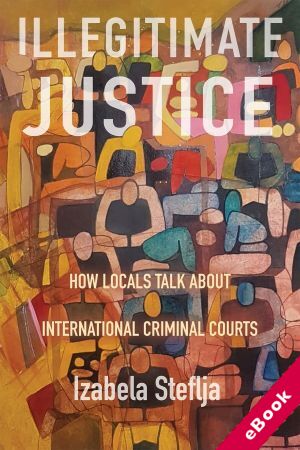
International criminal courts exist to help countries and communities move forward after atrocities and to bring those accused of war crimes to justice. Yet local residents and witnesses often perceive them to lack political legitimacy.
Drawn from extensive primary research in Rwanda, Bosnia-Herzegovina, Serbia, and Kenya, Illegitimate Justice challenges the view that as long as international courts are striving for the concept of justice, establishing legal precedents, and prosecuting war criminals, they are fulfilling their purpose. Through interviews with individuals in the fields of education, law, religion, politics, the media, and civil society, Izabela Steflja listens to the people affected by conflict and by the justice processes meant to repair harm. She reveals how international courts have failed local communities through lack of accountability - even, at times, active disregard. The stories local people tell about international courts differ radically from those the international community tells itself about justice and reconciliation.
Combining field research with an original comparative narrative model, Illegitimate Justice will be invaluable reading for people active in post-conflict communities and work, as well as for legal, political, and human rights students and scholars.










