
The eBooks we sell are sold as a single-user licence and are intended for the end user only.
The sale of some eBooks are restricted to certain countries. To alert you to such restrictions, please select the country of the billing address of your credit or debit card you wish to use for payment.
For further information see https://www.wildy.com/ebook-formats
Once the order is confirmed an e-mail will be sent to you to allow you to download the eBook. For UK purchases this will be automatic. For purchases outside the UK a member of staff will need to confirm the sale. (Staff are available to do this during normal business hours, Mon-Fri 8:30-17:00 UK time)
All eBooks are supplied firm sale and cannot be returned. If you believe there is a fault with your eBook then contact us on ebooks@wildy.com and we will help in resolving the issue. This does not affect your statutory rights.
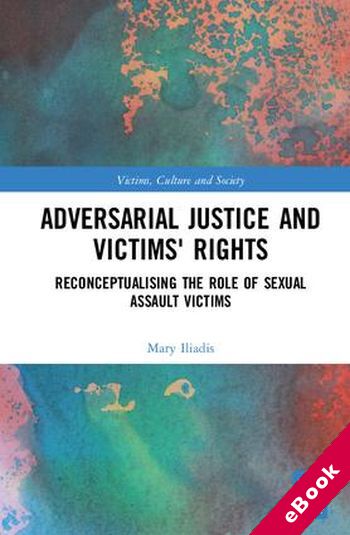
The rights, status and treatment of sexual assault victims has emerged as a significant 21st-century concern, occupying the forefront of legal commentary on international policy agendas. This book explores the extent to which reforms that offer victims enhanced rights to information and participation across England and Wales, Ireland and South Australia can address sexual assault victims’ procedural and substantive justice concerns. Informed by the voices of 26 high-level criminal justice professionals, legal stakeholders and victim support workers, and a quantitative dataset, this book also considers whether legal representation can address some of the problems of the prosecution process for sexual assault victims in Victoria and, indeed, in other adversarial jurisdictions that employ similar legislative frameworks. While acknowledging the value of victim-focused reforms, this book contends that cultural changes to the ways in which sexual assault victims are perceived and treated are necessary in order to improve victims’ experiences of the legal process.
Reconceptualising the role of sexual assault victims from ‘witnesses’ to ‘participants’ will also increase the likelihood that victims’ rights and interests will be considered alongside those of the state and the accused.This book situates its findings within broader debates about the role, rights and treatment of sexual assault victims in adversarial justice systems and outlines prospects for the transfer of policy and practice between jurisdictions. Adversarial Justice and Victims’ Rights will interest academic and policy stakeholders engaged in criminology, law and socio-legal studies, as well as undergraduate and postgraduate students researching sexual violence and victims’ access to justice.










