
Wildy Logo
(020) 7242 5778
enquiries@wildy.com

Book of the Month

Cover of McMeel on the Construction of Contracts: Interpretation, Implication and Rectification

McMeel on the Construction of Contracts: Interpretation, Implication and Rectification

Price: £225.00

Land Registration Manual
4th ed


 Ash Jones


Welcome to Wildys

Watch


Judicial Cooperation in Commercial Litigation 3rd ed (The British Cross-Border Financial Centre World)


 Ian Kawaley, David Doyle, Shade Subair Williams


Offers for Newly Called Barristers & Students

Special Discounts for Newly Called & Students

Read More ...


Secondhand & Out of Print

Browse Secondhand Online

Read More...


2025-6 Christmas and New Year Closing

We are now closed for the Christmas and New Year period, returning on Monday 5th January 2026. Orders placed during this time will be processed upon our return on 5th January.

Hide this message

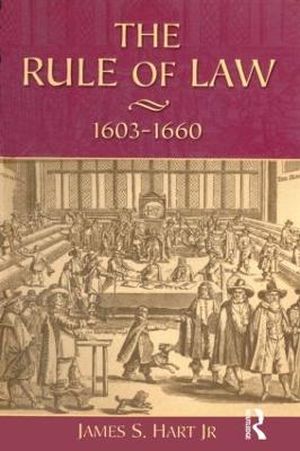
The Rule of Law, 1603-1660: Crowns, Courts and Judges


ISBN13: 9780582238565
ISBN: 0582238560
Published: July 2003
Publisher: Pearson Education Ltd
Country of Publication: UK
Format: Paperback
Price: £80.99


This is a Print On Demand Title.

The publisher will print a copy to fulfill your order. Books can take between 1 to 3 weeks. Looseleaf titles between 1 to 2 weeks.

This work measures contemporary attitudes to the law - within and outside of the legal profession - to see how 17th century Englishmen defined the role of law in their society, to see what their expectations were of the law and how these expectations helped shape political debate - and ultimately determined political decisions - over the course of a very turbulent century.


Subjects:
Legal History
Contents:
SECTION I: FOUNDATIONS OF LAW
Introduction.
1. The Structure and Machinery of the Law.
2. The Judiciary
SECTION II: ROYAL GOVERNMENT
3. James I: of Kings and Kingdoms.
4. Charles I: New Solutions for Old Problems
SECTION III: PARLIAMENTARY GOVERNMENT
5. The High Court of Parliament.
6. The Great Council
SECTION IV: CROMWELLIAN GOVERNMENT
7. Law and the New Republic.
8. The Good Constable
Conclusion







