
The eBooks we sell are sold as a single-user licence and are intended for the end user only.
The sale of some eBooks are restricted to certain countries. To alert you to such restrictions, please select the country of the billing address of your credit or debit card you wish to use for payment.
For further information see https://www.wildy.com/ebook-formats
Once the order is confirmed an e-mail will be sent to you to allow you to download the eBook. For UK purchases this will be automatic. For purchases outside the UK a member of staff will need to confirm the sale. (Staff are available to do this during normal business hours, Mon-Fri 8:30-17:00 UK time)
All eBooks are supplied firm sale and cannot be returned. If you believe there is a fault with your eBook then contact us on ebooks@wildy.com and we will help in resolving the issue. This does not affect your statutory rights.
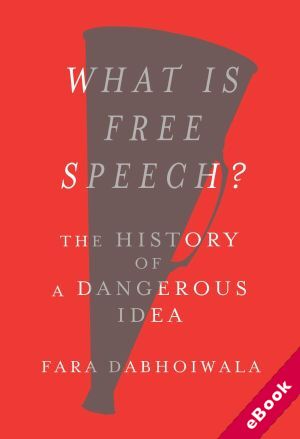
‘Free Speech!’ is a clarion call all over the world, yet what it means today is more contested than ever. Many cultures regard it as dangerous: in China, India, and across the Islamic world, unorthodox views about politics, sex, and religion are repressed and people are often punished for expressing them. Even in the west, where it is held up as a core value, there is widespread discord and disagreement about what freedom of expression means. Amidst perennial imbalances of power, continually evolving cultural taboos, dramatic new technologies and a fast-changing global media landscape, where free speech comes from – and how we might think about it – are critical questions.
Through the lens of history, What Is Free Speech? shows us that freedom of speech is not an absolute from which societies and regimes have drifted or dissented at different times, but something more complicated and interesting. This book explains how to think more deeply about free speech as a global as well as a local question — by tracing how we got into our current predicaments, showing that history complicates our contemporary presumptions, and suggesting fresh possibilities for the future.










