
The eBooks we sell are sold as a single-user licence and are intended for the end user only.
The sale of some eBooks are restricted to certain countries. To alert you to such restrictions, please select the country of the billing address of your credit or debit card you wish to use for payment.
For further information see https://www.wildy.com/ebook-formats
Once the order is confirmed an e-mail will be sent to you to allow you to download the eBook. For UK purchases this will be automatic. For purchases outside the UK a member of staff will need to confirm the sale. (Staff are available to do this during normal business hours, Mon-Fri 8:30-17:00 UK time)
All eBooks are supplied firm sale and cannot be returned. If you believe there is a fault with your eBook then contact us on ebooks@wildy.com and we will help in resolving the issue. This does not affect your statutory rights.
Due to a technical issue some ebooks are not available to order.
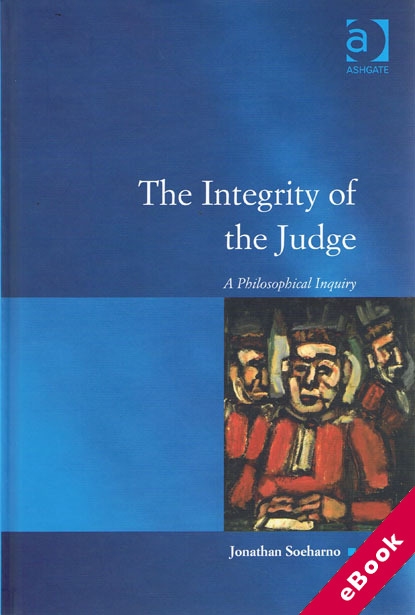
There is no consensus among legal scholars on the meaning of judicial integrity, nor has legal scholarship yet seen a well-articulated discussion about the normative concept of judicial integrity. This book fills this gap by developing a theory of judicial integrity that can be applied to safeguarding mechanisms.
Author Jonathan Soeharno makes an analysis of the discourses on judicial integrity in judiciaries in both established and developing democracies. In the former, the rule of law is well-developed and the trust in the judges is high, yet new demands for accountability emerge. In the latter, traditional integrity problems such as fraud and corruption take center stage.
The author argues that integrity must be understood both as professional virtue--discussed here through the lens of virtue ethical theory--and as the safeguarding of public trust, as understood through institutional theory. He places this new model of judicial integrity into the contexts of judicial decision-making and judicial conduct, before concluding with a discussion of applied ethics, as he recommends parameters for the safeguarding of this extremely important, and until now little understood, legal and moral concept. The Integrity of the Judge is a significant new work for legal theorists and philosophers, as well as scholars of legal and judicial ethics.










