
The eBooks we sell are sold as a single-user licence and are intended for the end user only.
The sale of some eBooks are restricted to certain countries. To alert you to such restrictions, please select the country of the billing address of your credit or debit card you wish to use for payment.
For further information see https://www.wildy.com/ebook-formats
Once the order is confirmed an e-mail will be sent to you to allow you to download the eBook. For UK purchases this will be automatic. For purchases outside the UK a member of staff will need to confirm the sale. (Staff are available to do this during normal business hours, Mon-Fri 8:30-17:00 UK time)
All eBooks are supplied firm sale and cannot be returned. If you believe there is a fault with your eBook then contact us on ebooks@wildy.com and we will help in resolving the issue. This does not affect your statutory rights.
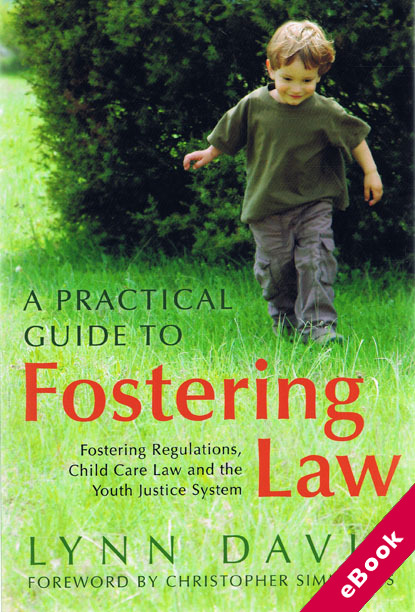
A Practical Guide to Fostering Law is an accessible, jargon-free guide to the key elements of the law that concern foster carers and the professionals who work with them.
It aims to help foster carers understand where they fit into the complex web of regulations surrounding childcare and to demystify the jargon and terminology which is often used but rarely explained. The book covers the laws in England and Wales governing fostering agencies and foster carers themselves, including foster carers' rights, and the formalities of placement procedures. It also provides explanations of care proceedings, the foster carer as a witness, what happens if a young fostered person gets into trouble, and moving on from foster care.
The last section provides a 'who's who' of the main professionals involved and a jargon-busting glossary of the key terms often used. It also includes illustrative case examples and each chapter concludes with suggestions for where to find more information.
This guide will be an invaluable resource for current and prospective foster carers and the professionals who work with them, such as support workers, social workers and foster agency staff.










