The eBooks we sell are sold as a single-user licence and are intended for the end user only.
The sale of some eBooks are restricted to certain countries. To alert you to such restrictions, please select the country of the billing address of your credit or debit card you wish to use for payment.
For further information see https://www.wildy.com/ebook-formats
Once the order is confirmed an e-mail will be sent to you to allow you to download the eBook. For UK purchases this will be automatic. For purchases outside the UK a member of staff will need to confirm the sale. (Staff are available to do this during normal business hours, Mon-Fri 8:30-17:00 UK time)
All eBooks are supplied firm sale and cannot be returned. If you believe there is a fault with your eBook then contact us on ebooks@wildy.com and we will help in resolving the issue. This does not affect your statutory rights.
Due to a technical issue some ebooks are not available to order.
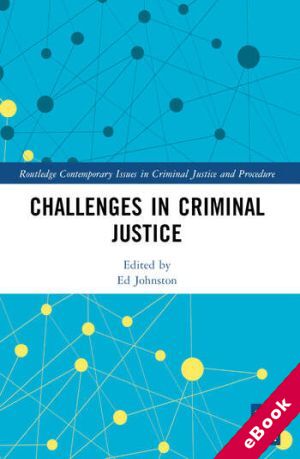
This collection examines contemporary challenges to the criminal justice system in England and Wales.
The chapters, written by established academics, rising stars and practising lawyers, seek not only to highlight these challenges but to offer solutions. The book examines issues with legal assistance in the police station, concerns relating to juror decision making and problems in and presented by both virtual hearings and the advent of the Single Justice Procedure Notice. The work also examines challenges surrounding vulnerability in the criminal justice system. Here, diversity includes vulnerability in the criminal trial, neurodivergence as well as issues with diversity and marginalisation in the criminal justice system as a whole. The book also discusses matters centred around sexual offending – including the attrition rate in rape cases as well as the recent development of ‘vigilante’ paedophile hunters and their acceptance as a viable limb of the criminal justice system. Finally, the volume looks at the post-conviction stage and examines recent prison policy through the lens of the human rights of the prisoner. The closing chapter examines the independence of the Criminal Cases Review Commission and highlights how recent changes have undermined its independence.
While focused on England and Wales, the topics discussed are of wider international significance and will be of interest to students, academics and policy-makers.