
The eBooks we sell are sold as a single-user licence and are intended for the end user only.
The sale of some eBooks are restricted to certain countries. To alert you to such restrictions, please select the country of the billing address of your credit or debit card you wish to use for payment.
For further information see https://www.wildy.com/ebook-formats
Once the order is confirmed an e-mail will be sent to you to allow you to download the eBook. For UK purchases this will be automatic. For purchases outside the UK a member of staff will need to confirm the sale. (Staff are available to do this during normal business hours, Mon-Fri 8:30-17:00 UK time)
All eBooks are supplied firm sale and cannot be returned. If you believe there is a fault with your eBook then contact us on ebooks@wildy.com and we will help in resolving the issue. This does not affect your statutory rights.
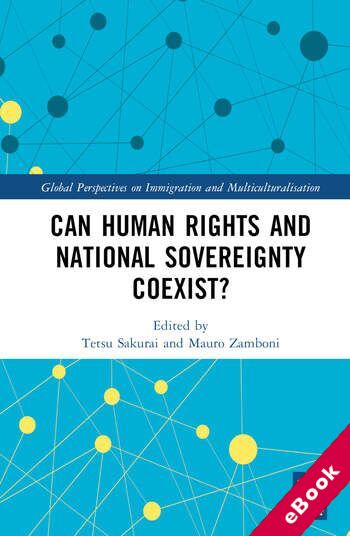
Looking at two of the key paradigms of the post-Cold War era – national sovereignty, and human rights – this book examines the possibilities for their reconciliation from a global perspective.
The real or imagined fear of a flood of immigrants has caused and fuelled the surge of an amalgam of populist political forces, anti-immigrant movements and exclusionist nationalism in many developed countries. In the last decade, we have witnessed the emergence of two phenomena in the political and legal spheres. On the one hand, there are liberal globalists asking for respect and the protection of the basic human rights of migrants and asylum seekers and arguing for their civic and social integration into host societies. On the other hand, there are growing calls for a tougher stance on immigration, and powerful populist politicians and governments have emerged in many developed countries. How can the idea of universal human rights survive exclusionist nationalism that uses a populist, unscrupulous approach to its advantage? The contributors to this book explore the meaning of, and possible solutions to, this dilemma using a wide range of approaches and seek appropriate ways of dealing with these normative predicaments shared by many developed societies.
Scholars and students of human rights, migration, nationalism and multiculturalism will find this a very valuable resource.











