
The eBooks we sell are sold as a single-user licence and are intended for the end user only.
The sale of some eBooks are restricted to certain countries. To alert you to such restrictions, please select the country of the billing address of your credit or debit card you wish to use for payment.
For further information see https://www.wildy.com/ebook-formats
Once the order is confirmed an e-mail will be sent to you to allow you to download the eBook. For UK purchases this will be automatic. For purchases outside the UK a member of staff will need to confirm the sale. (Staff are available to do this during normal business hours, Mon-Fri 8:30-17:00 UK time)
All eBooks are supplied firm sale and cannot be returned. If you believe there is a fault with your eBook then contact us on ebooks@wildy.com and we will help in resolving the issue. This does not affect your statutory rights.
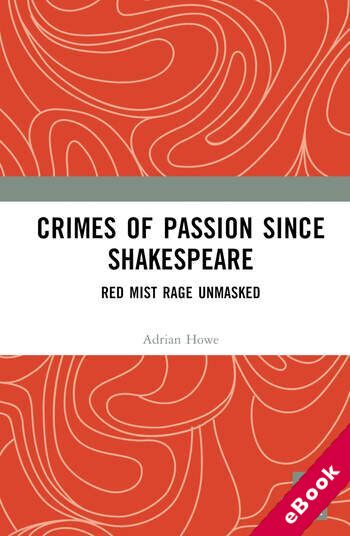
Bringing key Shakespeare texts into dialogue with feminist socio-legal research, this book investigates the notion of a ‘crime of passion’ – indicatively, wife-killing.
Its key concern is to bring attention to a cultural and legal revolution widely overlooked even in the law field where it occurred. In 2009, the English Parliament passed a controversial law abolishing the defence of provocation. Explaining the new law, reformers said that this so-called ‘heat of passion’ defence had allowed men to get away with murder by blaming the victim. Abolishing it in cases of alleged ‘infidelity’ would ‘end the culture of excuses’. Unpacking what was at stake in the reformers’ revolutionary challenge to the English law of murder’s age-old concession to ‘human frailty’ in ‘red mist’ rage cases, this book charts passion’s progress in wife-killing cases over the centuries. It commences in the early modern era when jurists were busy distinguishing murder from manslaughter and, contemporaneously, Shakespeare set about querying culturally-inscribed excuses for femicide in his plays, Titus Andronicus and Othello.
This book will appeal to feminist and socio-legal scholars, criminologists and those working in the fields of law and literature, legal theory and Shakespeare studies. More widely, it will appeal to anyone interested in so-called ‘crimes of passion’.










