
The eBooks we sell are sold as a single-user licence and are intended for the end user only.
The sale of some eBooks are restricted to certain countries. To alert you to such restrictions, please select the country of the billing address of your credit or debit card you wish to use for payment.
For further information see https://www.wildy.com/ebook-formats
Once the order is confirmed an e-mail will be sent to you to allow you to download the eBook. For UK purchases this will be automatic. For purchases outside the UK a member of staff will need to confirm the sale. (Staff are available to do this during normal business hours, Mon-Fri 8:30-17:00 UK time)
All eBooks are supplied firm sale and cannot be returned. If you believe there is a fault with your eBook then contact us on ebooks@wildy.com and we will help in resolving the issue. This does not affect your statutory rights.
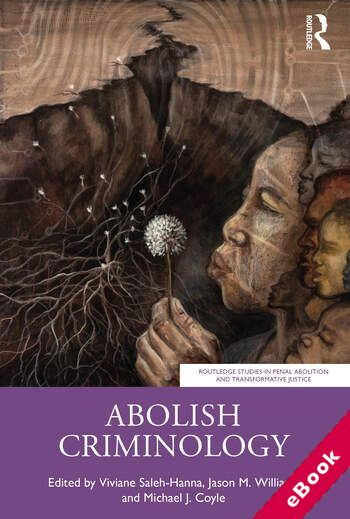
Abolish Criminology presents critical scholarship on Criminology and Criminal Justice ideologies and practices, alongside emerging freedom-driven discourses that encourage a vision and practice of new world formations.
The book introduces readers to a detailed history and analysis of crime as a concept and its colonizing trajectories into existence and enforcement. These significant contexts buried within peculiar academic histories are often overlooked or unknown in academic and public discussions, and representations of crime and the criminal legal system. The book offers written, visual, and poetic teachings through which readers, students, and educators can engage with the often discussed but seldom understood concept of crime and its enforcement through the criminal legal system’s research, theories, agencies and dominant cultures.
Abolish Criminology serves the needs of undergraduate and graduate students and educators in the social sciences, arts, and humanities. It will also appeal to scholars, researchers, policy makers, activists, community organizers, social movement builders, and various reading groups comprised of the general public grappling with the increased critical public discourse on policing and criminal legal reform or abolition.










