
The eBooks we sell are sold as a single-user licence and are intended for the end user only.
The sale of some eBooks are restricted to certain countries. To alert you to such restrictions, please select the country of the billing address of your credit or debit card you wish to use for payment.
For further information see https://www.wildy.com/ebook-formats
Once the order is confirmed an e-mail will be sent to you to allow you to download the eBook. For UK purchases this will be automatic. For purchases outside the UK a member of staff will need to confirm the sale. (Staff are available to do this during normal business hours, Mon-Fri 8:30-17:00 UK time)
All eBooks are supplied firm sale and cannot be returned. If you believe there is a fault with your eBook then contact us on ebooks@wildy.com and we will help in resolving the issue. This does not affect your statutory rights.
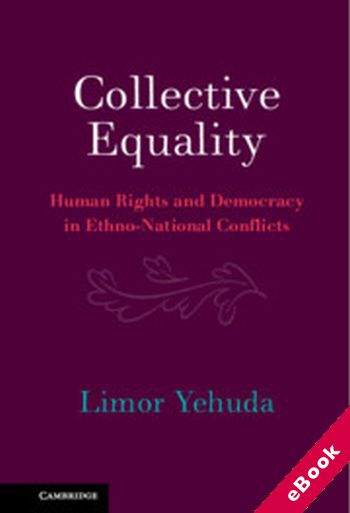
Over the last decades international and regional human rights norms have been increasingly applied to constitutional provisions, revealing significant tensions between primary political arrangements, such as power-sharing institutions, and human rights norms. This book argues that these tensions, generally framed as a peace versus justice dilemma, are built on an individualistic conception of justice that fails to account for the empirical reality in such places characterized by ethnically-based political exclusion and inequalities. By introducing the concept of 'collective equality' as a new theoretical basis for the law of peace this timely book proposes a new approach for dealing with the tensions between peace related arrangements and human rights. Through principled, pragmatic, and legal reasoning the book develops a new paradigm that captures more accurately what equality and human rights mean and require in the context of ethno-national conflicts and provides potent guidance for advancing justice and peace in such places.










