
The eBooks we sell are sold as a single-user licence and are intended for the end user only.
The sale of some eBooks are restricted to certain countries. To alert you to such restrictions, please select the country of the billing address of your credit or debit card you wish to use for payment.
For further information see https://www.wildy.com/ebook-formats
Once the order is confirmed an e-mail will be sent to you to allow you to download the eBook. For UK purchases this will be automatic. For purchases outside the UK a member of staff will need to confirm the sale. (Staff are available to do this during normal business hours, Mon-Fri 8:30-17:00 UK time)
All eBooks are supplied firm sale and cannot be returned. If you believe there is a fault with your eBook then contact us on ebooks@wildy.com and we will help in resolving the issue. This does not affect your statutory rights.
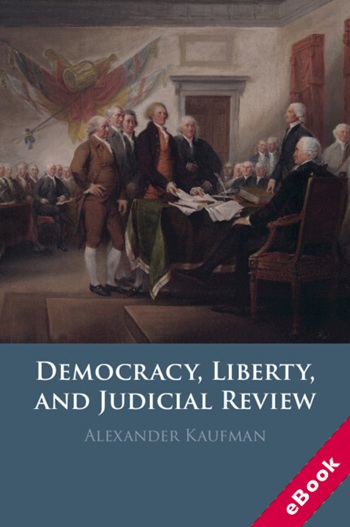
Contemporary democratic theory often posits that the will of the majority should resolve fundamental questions regarding rights, rather than the courts. However, this perspective misunderstands the essence of democracy, where the protection of basic liberties by the judiciary is, in fact, integral to democratic governance. Recent Supreme Court decisions have made it a challenging time to defend judicial review, seemingly validating the concerns of its critics. Are the sceptics correct in asserting that an unrepresentative branch should not decide fundamental questions about rights? Alexander Kaufman argues that such a conclusion overlooks the crucial role judicial review has played in modern democracies: dismantling Jim Crow laws, abolishing poll taxes, and striking down numerous other discriminatory laws enacted by elected representatives-laws that erode democratic values. Far from diluting democracy, judicial review is a vital component of it and abandoning this practice would be a concession to its adversaries.










