Wildy Logo
(020) 7242 5778
enquiries@wildy.com

Book of the Month

Cover of 4 Stone Buildings on Liquidators

4 Stone Buildings on Liquidators

Edited by: Andrew de Mestre KC
Price: £289.00

Planning Law:
A Practitioner's
Handbook 2nd ed


 William Webster, Robert Weatherley


Welcome to Wildys

Watch


Corporate Insolvency Practice:
Litigation, Procedure
and Precedents 3rd ed


 Mark Watson-Gandy


Offers for Newly Called Barristers & Students

Special Discounts for Newly Called & Students

Read More ...


Secondhand & Out of Print

Browse Secondhand Online

Read More...


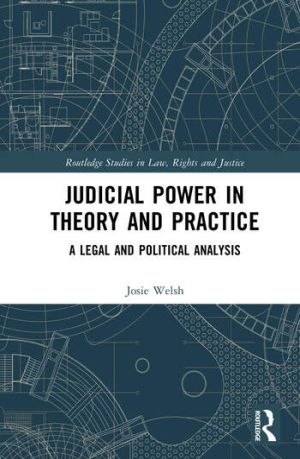
Judicial Power in Theory and Practice: A Legal and Political Analysis


ISBN13: 9781032849508
To be Published: March 2027
Publisher: Routledge
Country of Publication: UK
Format: Hardback
Price: £171.99


Debates about judicial power in the United Kingdom and elsewhere are long-standing but have, in recent years become politicised and taken on a new lease of life. The adoption of a language of activism – in academic debate, political discourse and media reports - impacts how we understand judicial power and this is problematic. The current language is based upon a series of narratives which appear to offer clarity about a phenomenon which is inherently complex, changeable and context dependent.

This book makes the case for a ‘new’ language of judicial power. It offers an innovative analytical framework informed by political science and social theory which puts the ‘power’ back into the debates about judicial power. Using this framework aids the reader in ‘thinking politically’ about the subject in order to develop more comprehensive accounts of judicial power in any setting. It will be of use to scholars, legal practitioners, media professionals and anyone with an interest or reason to be thinking, writing or discussing the power of judges.


Subjects:
Judiciary
Contents:
Introduction
1. Confronting the phrase 'judicial power'
2. Putting the 'power' back into debates about judicial power
3. A new analytical framework: how to think politically about judicial power
4. Thinking politically in practice: declarations of incompatibility
5. Thinking politically in practice: the office of Chief Justice
6. Developing components of a new language of judicial power
Conclusions








