The eBooks we sell are sold as a single-user licence and are intended for the end user only.
The sale of some eBooks are restricted to certain countries. To alert you to such restrictions, please select the country of the billing address of your credit or debit card you wish to use for payment.
For further information see https://www.wildy.com/ebook-formats
Once the order is confirmed an e-mail will be sent to you to allow you to download the eBook. For UK purchases this will be automatic. For purchases outside the UK a member of staff will need to confirm the sale. (Staff are available to do this during normal business hours, Mon-Fri 8:30-17:00 UK time)
All eBooks are supplied firm sale and cannot be returned. If you believe there is a fault with your eBook then contact us on ebooks@wildy.com and we will help in resolving the issue. This does not affect your statutory rights.
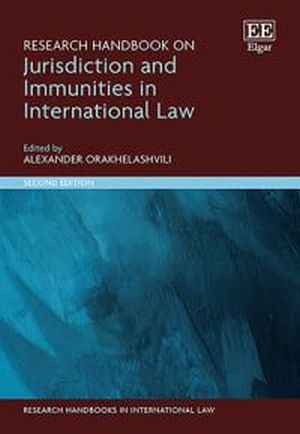
This updated Research Handbook presents a comprehensive analysis of the international law of jurisdiction and immunities, examining the mutual interdependence between the two as well as shedding light on the implications. Featuring diverse contributions from leading experts, emerging scholars, and practitioners, it provides an impartial perspective on the applicable international law.
Incorporating novel insights and recent developments, the Research Handbook covers key topics including the concept of universal jurisdiction, the differentiation of immunities from jurisdiction, and immunity claims in various types of judicial proceedings. It discusses the complex legal questions that arise when a state asserts its jurisdiction over persons that are based abroad or are not citizens of that state, and analyzes the immunity of foreign states and international organizations. Considering the impact of recent legislation, court cases and events, this revised second edition highlights ongoing trends and controversies surrounding jurisdiction and immunities in the context of international law.
This second edition of the Research Handbook on Jurisdiction and Immunities in International Law will benefit students, researchers, and educators in international public law. Civil servants and employees of international organizations and NGOs will also find it an invaluable resource.