
The eBooks we sell are sold as a single-user licence and are intended for the end user only.
The sale of some eBooks are restricted to certain countries. To alert you to such restrictions, please select the country of the billing address of your credit or debit card you wish to use for payment.
For further information see https://www.wildy.com/ebook-formats
Once the order is confirmed an e-mail will be sent to you to allow you to download the eBook. For UK purchases this will be automatic. For purchases outside the UK a member of staff will need to confirm the sale. (Staff are available to do this during normal business hours, Mon-Fri 8:30-17:00 UK time)
All eBooks are supplied firm sale and cannot be returned. If you believe there is a fault with your eBook then contact us on ebooks@wildy.com and we will help in resolving the issue. This does not affect your statutory rights.
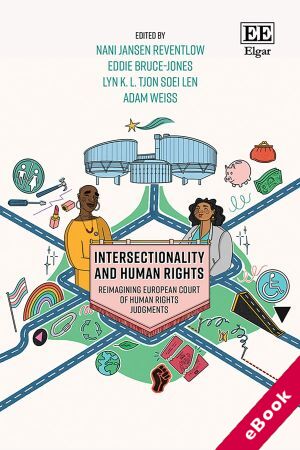
In this book activists, practitioners, and academics rewrite recent European Court of Human Rights judgments to respond to intersecting forms of oppression, discrimination, and other human rights harms. They illustrate how people with intersecting identities experience discrimination in complex ways that the Court often overlooks.
Using a collaborative and multidisciplinary approach, each chapter provides a vision for a jurisprudence that accounts for intersecting forms of oppression. This innovative legal paradigm of legal analysis contributes to the broader global field of critical rewrites that incorporates feminist, queer, and indigenous perspectives into existing judgments.
The book reimagines the Court’s case law through an intersectional lens, exploring issues spanning gender, race, religion, sexuality and status. Ultimately, it demonstrates how judgments that fail to consider the impacts of intersecting axes of marginalisation and oppression can be reimagined – pointing to a future where European human rights jurisprudence is more responsive.
This book is an invaluable resource for scholars and students of European law, human rights and public international law. It is also a vital read for legal practitioners and advocates working across European jurisdictions on human rights and equality for its innovative legal theory perspectives.










