The eBooks we sell are sold as a single-user licence and are intended for the end user only.
The sale of some eBooks are restricted to certain countries. To alert you to such restrictions, please select the country of the billing address of your credit or debit card you wish to use for payment.
For further information see https://www.wildy.com/ebook-formats
Once the order is confirmed an e-mail will be sent to you to allow you to download the eBook. For UK purchases this will be automatic. For purchases outside the UK a member of staff will need to confirm the sale. (Staff are available to do this during normal business hours, Mon-Fri 8:30-17:00 UK time)
All eBooks are supplied firm sale and cannot be returned. If you believe there is a fault with your eBook then contact us on ebooks@wildy.com and we will help in resolving the issue. This does not affect your statutory rights.
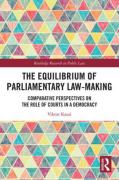
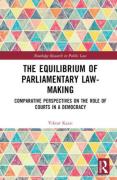
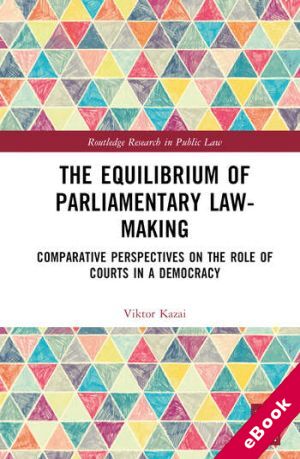
This book is a response to the dangers posed to constitutional democracy by the continuous growth of executive power and the simultaneous decline of parliaments’ role in policy formation. These phenomena are often manifested in the manipulation and even the violation of the rules of parliamentary law-making, called irregularities. If left without consequences, these irregularities can ultimately lead to the elimination of the procedural constraints imposed on the ruling political forces to prevent their arbitrary exercise of power.
This work investigates the constitutional significance of the irregularities of parliamentary law-making and explores the role that courts play in the remedy of these flaws. The analysis is premised on the concept of equilibrium. This explanatory concept denotes an ideal state in which parliamentary law-making complies with the requirements of constitutionalism, and judicial review is conceptualized as a mechanism suitable to achieve this aim. The volume places the judicial review of the regulation and the practice of parliamentary law-making at its centre and discusses all the relevant legal concepts, institutions and doctrines. It combines theoretical analysis with case-law-centered comparative research covering a large number of decisions delivered by apex courts operating in various jurisdictions.
Due to this methodological choice, the book aims to simultaneously contribute to the scholarly discourse and provide useful information to practicing lawyers and policy makers working in the areas of Constitutional Law and Politics and Comparative Law.