
The eBooks we sell are sold as a single-user licence and are intended for the end user only.
The sale of some eBooks are restricted to certain countries. To alert you to such restrictions, please select the country of the billing address of your credit or debit card you wish to use for payment.
For further information see https://www.wildy.com/ebook-formats
Once the order is confirmed an e-mail will be sent to you to allow you to download the eBook. For UK purchases this will be automatic. For purchases outside the UK a member of staff will need to confirm the sale. (Staff are available to do this during normal business hours, Mon-Fri 8:30-17:00 UK time)
All eBooks are supplied firm sale and cannot be returned. If you believe there is a fault with your eBook then contact us on ebooks@wildy.com and we will help in resolving the issue. This does not affect your statutory rights.
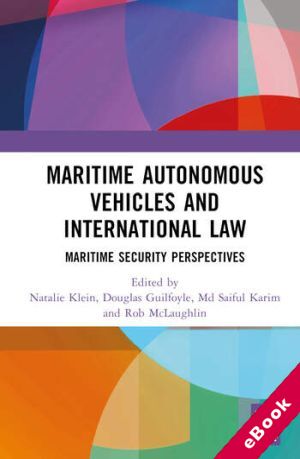
Maritime Autonomous Vehicles (MAVs) have the potential to radically alter all uses of maritime space, with technology progressing faster than the law. This book explores the current international legal framework and the options available to regulate maritime security in the face of emerging technologies.
MAVs are starting to play a role not only in policing and military security, but also for the perpetration of maritime crimes. Through discussing the existing international legal framework for combating maritime security threats, the book will consider the use of MAVs by states for various security purposes, and the potential dangers of MAVs in the hands of non-state actors. As the intersection of maritime technology with international maritime security law is crucial to a safe future for all, this timely book makes essential suggestions to adapt existing legal frameworks to match emerging technologies. Addressing critical questions such as who exercises jurisdiction when ships are remotely controlled, how jamming technology may be lawfully deployed and what force may be permissible during maritime law enforcement, this book identifies a diversity of current legal gaps and problems, and makes suggestions as to how to rectify them.
This book will be of interest to students and scholars in the field of the law of the sea, maritime security and in emerging technologies.










