Wildy Logo
(020) 7242 5778
enquiries@wildy.com

Book of the Month

Cover of 4 Stone Buildings on Liquidators

4 Stone Buildings on Liquidators

Edited by: Andrew de Mestre KC
Price: £289.00

Effective Written Advocacy:
A Guide for
Practitioners 3rd


 Andrew Goodman


Welcome to Wildys

Watch


Club Law Manual
3rd ed


 Henry Stevens
Julian Allsop


Offers for Newly Called Barristers & Students

Special Discounts for Newly Called & Students

Read More ...


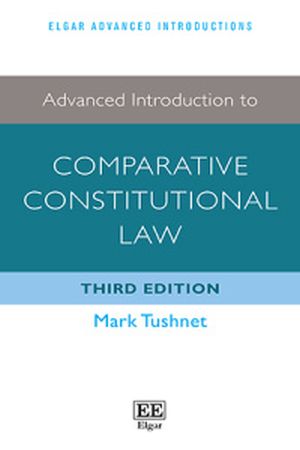
Advanced Introduction to Comparative Constitutional Law 3rd ed


ISBN13: 9781049401188
Previous Edition ISBN: 9781786437181
To be Published: December 2026
Publisher: Edward Elgar Publishing Limited
Country of Publication: UK
Format: Hardback
Price: £96.00
Paperback edition not yet published, ISBN13 9781049401218


Mark Tushnet, a world-renowned scholar of constitutional law, has excelled in further extending and revising his essential introduction to comparative constitutional law. Drawing on examples from a wide range of nations to demonstrate the global nature of the topic, Tushnet investigates the structure of government, forms of constitutional review and constitution-making, as well as evaluating proportionality analysis and its alternatives.

New to this thoroughly revised third edition:

  • Consistent engagement with perspectives from the Global South
  • Updated coverage of recent scholarship on the structures of constitutional review
  • New material on the vertical division of power, including federalism and secession
  • A new chapter on constitutionalism and authoritarianism, examining democratic decline, resilience and recovery

Addressing the key issues of constitutional design and structure, this third edition will serve as a crucial, up-to-date resource for students and scholars of comparative constitutional law.


Subjects:
Constitutional and Administrative Law, Comparative Law
Contents:
1. Introduction: comparative constitutional law – history and contours
2. Constitution-making
3. The structures of constitutional review and some implications for substantive constitutional law
4. The structure of rights analysis: proportionality, rules, and international law
5. The structure of government
6. Constitutionalism and authoritarianism
7. Conclusion