
The eBooks we sell are sold as a single-user licence and are intended for the end user only.
The sale of some eBooks are restricted to certain countries. To alert you to such restrictions, please select the country of the billing address of your credit or debit card you wish to use for payment.
For further information see https://www.wildy.com/ebook-formats
Once the order is confirmed an e-mail will be sent to you to allow you to download the eBook. For UK purchases this will be automatic. For purchases outside the UK a member of staff will need to confirm the sale. (Staff are available to do this during normal business hours, Mon-Fri 8:30-17:00 UK time)
All eBooks are supplied firm sale and cannot be returned. If you believe there is a fault with your eBook then contact us on ebooks@wildy.com and we will help in resolving the issue. This does not affect your statutory rights.
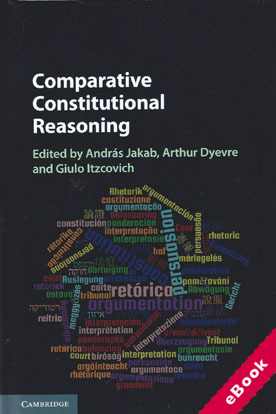
To what extent is the language of judicial opinions responsive to the political and social context in which constitutional courts operate?
Courts are reason-giving institutions with argumentation playing a central role in constitutional adjudication. However, a cursory look at just a handful of constitutional systems suggests important differences in the practices of constitutional judges whether in matters of form, style, or language.
Focusing on independently-verified leading cases globally, a combination of qualitative and quantitative analysis offers the most comprehensive and systematic account of constitutional reasoning to date. This analysis is supported by the examination of eighteen legal systems around the world including the European Court of Human Rights and the European Court of Justice.
Universally common aspects of constitutional reasoning are identified in this book, and contributors also examine whether common law countries differ to civil law countries in this respect.










