
The eBooks we sell are sold as a single-user licence and are intended for the end user only.
The sale of some eBooks are restricted to certain countries. To alert you to such restrictions, please select the country of the billing address of your credit or debit card you wish to use for payment.
For further information see https://www.wildy.com/ebook-formats
Once the order is confirmed an e-mail will be sent to you to allow you to download the eBook. For UK purchases this will be automatic. For purchases outside the UK a member of staff will need to confirm the sale. (Staff are available to do this during normal business hours, Mon-Fri 8:30-17:00 UK time)
All eBooks are supplied firm sale and cannot be returned. If you believe there is a fault with your eBook then contact us on ebooks@wildy.com and we will help in resolving the issue. This does not affect your statutory rights.
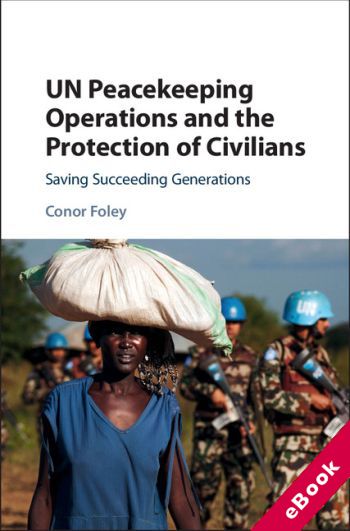
Over 100,000 United Nations uniformed peacekeeping personnel are deployed on missions with authority from the Security Council to protect civilians in conflict zones. Chapter VII of the UN Charter allows for the use of force on UN missions, but does not list the rules governing the use; they are found in either the jus in bello provisions of international humanitarian law (IHL) or the regulations on the use of force in international human rights law.
The UN Charter specifies that its provisions take precedence over all other international treaties. While the UN acknowledges the relevance of IHL to its missions, this book argues that the regulations of international human rights law usually provide more appropriate guidance. UN missions mandated to protect civilians have repeatedly failed to do so, and mechanisms need to be created to improve their accountability to those that they are responsible for protecting.










