
The eBooks we sell are sold as a single-user licence and are intended for the end user only.
The sale of some eBooks are restricted to certain countries. To alert you to such restrictions, please select the country of the billing address of your credit or debit card you wish to use for payment.
For further information see https://www.wildy.com/ebook-formats
Once the order is confirmed an e-mail will be sent to you to allow you to download the eBook. For UK purchases this will be automatic. For purchases outside the UK a member of staff will need to confirm the sale. (Staff are available to do this during normal business hours, Mon-Fri 8:30-17:00 UK time)
All eBooks are supplied firm sale and cannot be returned. If you believe there is a fault with your eBook then contact us on ebooks@wildy.com and we will help in resolving the issue. This does not affect your statutory rights.
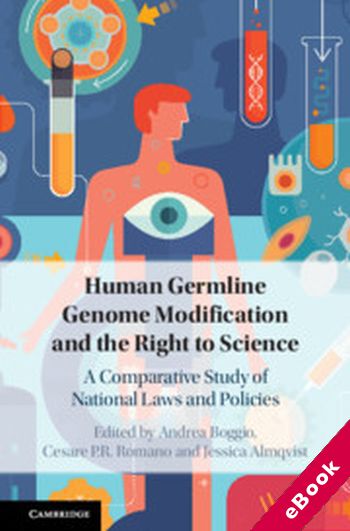
The advent of the CRISPR/Cas9 class of genome editing tools is transforming not just science and medicine, but also law. When the genome of germline cells is modified, the modifications could be inherited, with far-reaching effects in time and scale. Legal systems are struggling with keeping up with the CRISPR revolution and both lawyers and scientists are often confused about existing regulations. This book contains an analysis of the national regulatory framework in eighteen selected countries. Written by national legal experts, it includes all major players in bioengineering, plus an analysis of the emerging international standards and a discussion of how international human rights standards should inform national and international regulatory frameworks. The authors propose a set of principles for the regulation of germline engineering, based on international human rights law, that can be the foundation for regulating heritable gene editing both at the level of countries as well as globally.










