
The eBooks we sell are sold as a single-user licence and are intended for the end user only.
The sale of some eBooks are restricted to certain countries. To alert you to such restrictions, please select the country of the billing address of your credit or debit card you wish to use for payment.
For further information see https://www.wildy.com/ebook-formats
Once the order is confirmed an e-mail will be sent to you to allow you to download the eBook. For UK purchases this will be automatic. For purchases outside the UK a member of staff will need to confirm the sale. (Staff are available to do this during normal business hours, Mon-Fri 8:30-17:00 UK time)
All eBooks are supplied firm sale and cannot be returned. If you believe there is a fault with your eBook then contact us on ebooks@wildy.com and we will help in resolving the issue. This does not affect your statutory rights.
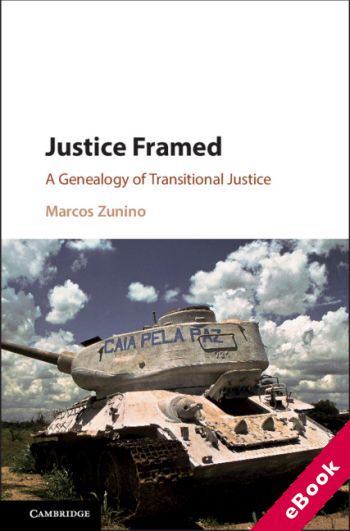
Why are certain responses to past human rights violations considered instances of transitional justice while others are disregarded? This study interrogates the history of the discourse and practice of the field to answer that question. Zunino argues that a number of characteristics inherited as transitional justice emerged as a discourse in the 1980s and 1990s have shaped which practices of the present and the past are now regarded as valid responses to past human rights violations. He traces these influential characteristics from Argentina's transition to democracy in 1983, the end of communism in Eastern Europe, the development of international criminal justice and the South African truth commission of 1995. Through an analysis of the post-World War II period, the decolonisation process and the Cold War, he identifies a series of episodes and mechanisms omitted from the history of transitional justice because they did not conform to its accepted characteristics.










