
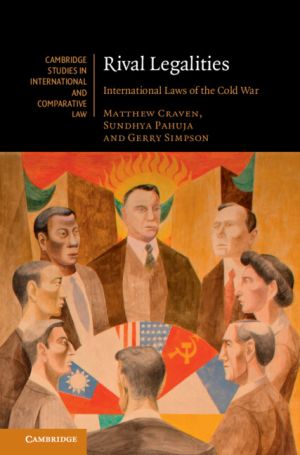
This book offers a wholly new way of thinking about the ideas, struggles and practices that constituted the “historical” Cold War. It challenges dominant myths about the history of the Cold War, arguing that far from being consumed by their ideological rivalry, the US and the Soviet Union were engaged in a conjoint project of world ordering. This idea of a unified Amero-Soviet project brings into view the many ways in which the Cold War was continuous with the imperialisms it displaced. Against this unity though, a rich plurality of law and legal forms emerged, and practices of South-South and South-North solidarity were forged which have since been obscured. The book makes visible the patterns drawn by the aftermath of this 'Cold War' legal order and seeks to both recuperate the imaginative resources that were made available at the time, and provide a corrective to contemporary prognostications that the 'rule-based order' may be nearing its end.










