
The eBooks we sell are sold as a single-user licence and are intended for the end user only.
The sale of some eBooks are restricted to certain countries. To alert you to such restrictions, please select the country of the billing address of your credit or debit card you wish to use for payment.
For further information see https://www.wildy.com/ebook-formats
Once the order is confirmed an e-mail will be sent to you to allow you to download the eBook. For UK purchases this will be automatic. For purchases outside the UK a member of staff will need to confirm the sale. (Staff are available to do this during normal business hours, Mon-Fri 8:30-17:00 UK time)
All eBooks are supplied firm sale and cannot be returned. If you believe there is a fault with your eBook then contact us on ebooks@wildy.com and we will help in resolving the issue. This does not affect your statutory rights.
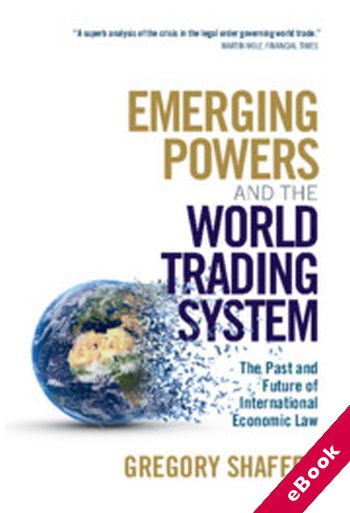
Victorious after World War II and the Cold War, the United States and its allies largely wrote the rules for international trade and investment. Yet, by 2020, it was the United States that became the great disrupter – disenchanted with the rules' constraints. Paradoxically, China, India, Brazil, and other emerging economies became stakeholders in and, at times, defenders of economic globalization and the rules regulating it. Emerging Powers and the World Trading System explains how this came to be and addresses the micropolitics of trade law – what has been developing under the surface of the business of trade through the practice of law, which has broad macro implications. This book provides a necessary complement to political and economic accounts for understanding why, at a time of hegemonic transition where economic security and geopolitics assume greater roles, the United States challenged, and emerging powers became defenders, of the legal order that the United States created.











