
The eBooks we sell are sold as a single-user licence and are intended for the end user only.
The sale of some eBooks are restricted to certain countries. To alert you to such restrictions, please select the country of the billing address of your credit or debit card you wish to use for payment.
For further information see https://www.wildy.com/ebook-formats
Once the order is confirmed an e-mail will be sent to you to allow you to download the eBook. For UK purchases this will be automatic. For purchases outside the UK a member of staff will need to confirm the sale. (Staff are available to do this during normal business hours, Mon-Fri 8:30-17:00 UK time)
All eBooks are supplied firm sale and cannot be returned. If you believe there is a fault with your eBook then contact us on ebooks@wildy.com and we will help in resolving the issue. This does not affect your statutory rights.
Due to a technical issue some ebooks are not available to order.
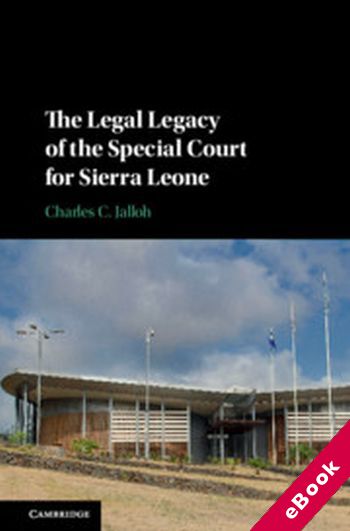
This important book considers whether the Special Court for Sierra Leone (SCSL), which was established jointly through an unprecedented bilateral treaty between the United Nations (UN) and Sierra Leone in 2002, has made jurisprudential contributions to the development of the nascent and still unsettled field of international criminal law.
A leading authority on the application of international criminal justice in Africa, Charles Jalloh argues that the SCSL, as an innovative hybrid international penal tribunal, made useful jurisprudential additions on key legal questions concerning greatest responsibility jurisdiction, the war crime of child recruitment, forced marriage as a crime against humanity, amnesty, immunity and the relationship between truth commissions and criminal courts. He demonstrates that some of the SCSL case law broke new ground, and in so doing, bequeathed a 'legal legacy' that remains vital to the ongoing global fight against impunity for atrocity crimes and to the continued development of modern international criminal law.










