
The eBooks we sell are sold as a single-user licence and are intended for the end user only.
The sale of some eBooks are restricted to certain countries. To alert you to such restrictions, please select the country of the billing address of your credit or debit card you wish to use for payment.
For further information see https://www.wildy.com/ebook-formats
Once the order is confirmed an e-mail will be sent to you to allow you to download the eBook. For UK purchases this will be automatic. For purchases outside the UK a member of staff will need to confirm the sale. (Staff are available to do this during normal business hours, Mon-Fri 8:30-17:00 UK time)
All eBooks are supplied firm sale and cannot be returned. If you believe there is a fault with your eBook then contact us on ebooks@wildy.com and we will help in resolving the issue. This does not affect your statutory rights.
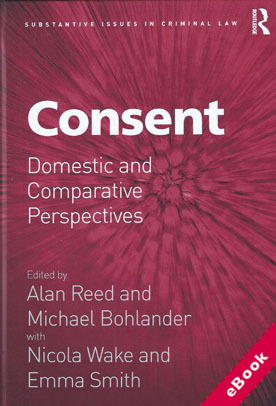
This volume presents a leading contribution to the law relating to Consent in the criminal law. In broad terms, the ambit of legally valid consent in law is contestable and opaque, and reveals significant problems in adoption of consistent approaches to doctrinal and theoretical underpinnings of consent.
The book seeks to provide a logical template to focus the debate. The overall concept addresses three specific elements within this arena, embracing an overarching synergy between them. It engages in an examination of UK provisions, with specialist contributions on Irish and Scottish law, and contrasts these against alternative domestic jurisdictions as well as comparative contributions addressing a particularised research grid for consent.
The comparative chapters provide a wider background of how other legal systems treat a variety of specialised issues relating to consent in the context of the criminal law. The debate in relation to consent principles continues for academics, practitioners and within the criminal justice system.
Having expert descriptions of the wider issues surrounding the particular discussion and of other legal systems approaches will stimulate and inform that debate. This collection will be a major source of reference for future discussion.










