
The eBooks we sell are sold as a single-user licence and are intended for the end user only.
The sale of some eBooks are restricted to certain countries. To alert you to such restrictions, please select the country of the billing address of your credit or debit card you wish to use for payment.
For further information see https://www.wildy.com/ebook-formats
Once the order is confirmed an e-mail will be sent to you to allow you to download the eBook. For UK purchases this will be automatic. For purchases outside the UK a member of staff will need to confirm the sale. (Staff are available to do this during normal business hours, Mon-Fri 8:30-17:00 UK time)
All eBooks are supplied firm sale and cannot be returned. If you believe there is a fault with your eBook then contact us on ebooks@wildy.com and we will help in resolving the issue. This does not affect your statutory rights.
Scholars and practitioners alike agree that somehow the past needs to be addressed in order to enable individuals and collectives to rebuild trust and relationships. However, they also continue to struggle with critical questions. When is the right moment to address the legacies of the past after violent conflict? How can societies address the past without deepening the pain that arises from memories related to the violence and crimes committed in war? How can cultures of remembrance be established that would include and acknowledges the victims of all sides involved in violent conflict? How can various actors deal constructively with different interpretations of facts and history?
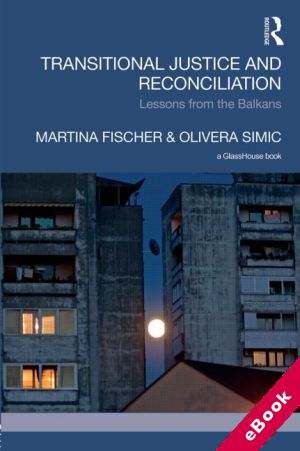
Two decades after the wars, societies in Bosnia, Serbia and Croatia – albeit to different degrees – are still facing the legacies of the wars of the 1990s on a daily basis. Reconciliation between and within these societies remains a formidable challenge, given that all three countries are still facing unresolved disputes either at a cross-border level or amongst parallel societies that persist at a local community level. This book engages scholars and practitioners from the regions of former Yugoslavia, as well as international experts, to reflect on the achievements and obstacles that characterise efforts to deal with the past. Drawing variously on empirical studies, theoretical discussions, and practical experience, their contributions offer invaluable insights into the complex relationship between transitional justice and conflict transformation.










