
The eBooks we sell are sold as a single-user licence and are intended for the end user only.
The sale of some eBooks are restricted to certain countries. To alert you to such restrictions, please select the country of the billing address of your credit or debit card you wish to use for payment.
For further information see https://www.wildy.com/ebook-formats
Once the order is confirmed an e-mail will be sent to you to allow you to download the eBook. For UK purchases this will be automatic. For purchases outside the UK a member of staff will need to confirm the sale. (Staff are available to do this during normal business hours, Mon-Fri 8:30-17:00 UK time)
All eBooks are supplied firm sale and cannot be returned. If you believe there is a fault with your eBook then contact us on ebooks@wildy.com and we will help in resolving the issue. This does not affect your statutory rights.
Due to a technical issue some ebooks are not available to order.
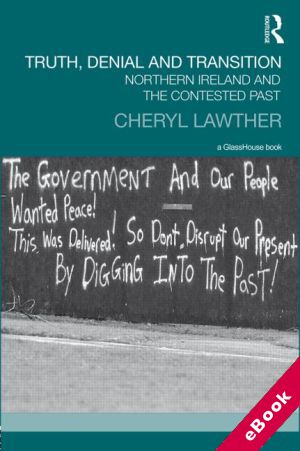
Truth, Denial and Transition: Northern Ireland and the Contested Past makes a unique and timely contribution to the transitional justice field. In contrast to the focus on truth and those societies where truth recovery has been central to dealing with the aftermath of human rights violations, comparatively little scholarly attention has been paid to those jurisdictions whose transition from violent conflict has been marked by the absence or rejection of a formal truth process. This book draws upon the case study of Northern Ireland, where, despite a lengthy debate, the question of establishing a formal truth recovery process remains hotly contested. The strongest and most vocal opposition has been from unionist political elites, loyalist ex-combatants and members of the security forces. Based on empirical research, their opposition is unpicked and interrogated at length throughout this book. Critically exploring notions of national imagination and blamelessness, the politics of victimhood and the tension between traditions of sacrifice and the fear of betrayal, this book is the first substantive effort to concentrate on the opponents of truth recovery rather than its advocates. This book will interest those studying truth processes and transitional justice in the fields of Law, Politics, and Criminology.










