
The eBooks we sell are sold as a single-user licence and are intended for the end user only.
The sale of some eBooks are restricted to certain countries. To alert you to such restrictions, please select the country of the billing address of your credit or debit card you wish to use for payment.
For further information see https://www.wildy.com/ebook-formats
Once the order is confirmed an e-mail will be sent to you to allow you to download the eBook. For UK purchases this will be automatic. For purchases outside the UK a member of staff will need to confirm the sale. (Staff are available to do this during normal business hours, Mon-Fri 8:30-17:00 UK time)
All eBooks are supplied firm sale and cannot be returned. If you believe there is a fault with your eBook then contact us on ebooks@wildy.com and we will help in resolving the issue. This does not affect your statutory rights.
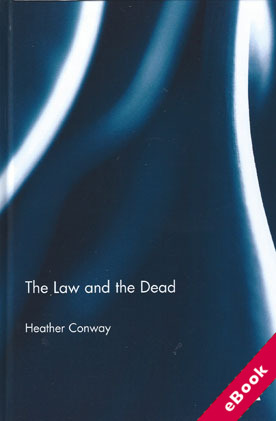
The fate of the dead is a compelling and emotive subject, which also raises increasingly complex legal questions. This book focuses on the substantive laws around disposal of the recently deceased and associated issues around their post-mortem fate. It looks primarily at the laws in England and Wales but also offers a comparative approach, drawing heavily on material from other common law jurisdictions including Australia, New Zealand, Canada and the United States.
The book provides an in-depth, contextual and comparative analysis of the substantive laws and policy issues around corpse disposal, exhumation and the posthumous treatment of the dead, including commemoration. Topics covered include: the legal frameworks around burial, cremation and other disposal methods; the hierarchy of persons who have a legal duty to dispose of the dead and who are entitled to possession of the deceased’s remains; offences against the dead; family burial disputes, and the legal status of burial instructions; the posthumous use of donated bodily material; and the rules around disinterment, and creating an appropriate memorial. A key theme of the book will be to look at the manner in which conflicts involving the dead are becoming increasingly common in secular, multi-cultural societies where the traditional nuclear family model is no longer the norm, and how such legal contests are resolved by courts.
As the first comprehensive survey of the laws in this area for decades, this book will be of use to academics, lawyers and judges adjudicating on issues around the fate of the dead, as well as the death industry and funeral service providers.











