
The eBooks we sell are sold as a single-user licence and are intended for the end user only.
The sale of some eBooks are restricted to certain countries. To alert you to such restrictions, please select the country of the billing address of your credit or debit card you wish to use for payment.
For further information see https://www.wildy.com/ebook-formats
Once the order is confirmed an e-mail will be sent to you to allow you to download the eBook. For UK purchases this will be automatic. For purchases outside the UK a member of staff will need to confirm the sale. (Staff are available to do this during normal business hours, Mon-Fri 8:30-17:00 UK time)
All eBooks are supplied firm sale and cannot be returned. If you believe there is a fault with your eBook then contact us on ebooks@wildy.com and we will help in resolving the issue. This does not affect your statutory rights.
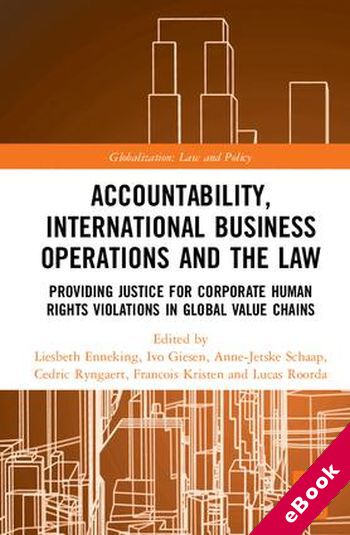
A consensus has emerged that corporations have societal and environmental responsibilities when operating transnationally. However, how exactly corporations can be held legally accountable for their transgressions, if at all, is less clear.
This volume inquires how regulatory tools stemming from international law, public law, and private law may or may not be used for transnational corporate accountability purposes. Attention is devoted to applicable standards of liability, institutional and jurisdictional issues, and practical challenges, with a focus on ways to improve the existing legal status quo. In addition, there is consideration of the extent to which non-legal regulatory instruments may complement or provide more viable alternatives to these legal mechanisms. The book combines legal-doctrinal approaches with comparative, interdisciplinary and policy insights with the dual aim of furthering the legal scholarly debate on these issues and enabling higher quality decision-making by policymakers seeking to implement regulatory measures that enhance corporate accountability in this context. Through its study of contemporary developments in legislation and case law, it provides a timely and important contribution to the scholarly and socio-political debate in the fast evolving field of international corporate social responsibility and accountability.










