The eBooks we sell are sold as a single-user licence and are intended for the end user only.
The sale of some eBooks are restricted to certain countries. To alert you to such restrictions, please select the country of the billing address of your credit or debit card you wish to use for payment.
For further information see https://www.wildy.com/ebook-formats
Once the order is confirmed an e-mail will be sent to you to allow you to download the eBook. For UK purchases this will be automatic. For purchases outside the UK a member of staff will need to confirm the sale. (Staff are available to do this during normal business hours, Mon-Fri 8:30-17:00 UK time)
All eBooks are supplied firm sale and cannot be returned. If you believe there is a fault with your eBook then contact us on ebooks@wildy.com and we will help in resolving the issue. This does not affect your statutory rights.
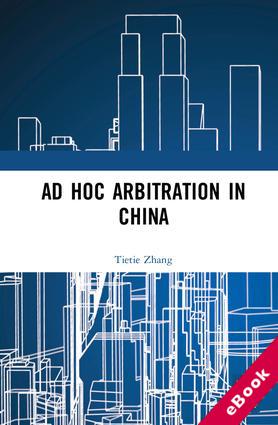
Arbitration is the dominant method in the world for resolving international commercial disputes. As compared with institutional arbitration, ad hoc arbitration has many advantages that make it a preferred way to resolve commercial disputes on many occasions. The Arbitration Law of the People’s Republic of China, however, requires that parties appoint an arbitration institution in their arbitration agreement, otherwise an ad hoc arbitration agreement is invalid. This rule seems to preclude ad hoc arbitration under Chinese law, and threatens the validity of many arbitration agreements that are imperfectly drafted. Fortunately, however, this does not mean Chinese courts will never enforce an ad hoc arbitration agreement or an ad hoc arbitration award.
This book informs parties and practitioners of potential pitfalls related to ad hoc arbitration in China and offers practical guidance. It also conducts a comparative study of the history of arbitration in the western world and in China, to identify the reasons for this hostility to ad hoc arbitration, and calls for changes to this requirement under Chinese law.